Abstract
The industrial Revolution, spanning the late 18th to early 19th centuries primarily in Britain before spreading globally, marked a profound shift from agrarian economies to industrialized societies driven by mechanization, steam power, and factory production. This article provides a detailed exploration of its foundational concepts, historical evolution, and theoretical frameworks, alongside an analysis of the underlying mechanisms, including physiological impacts on workers such as occupational diseases and nutritional shifts, as well as psychological effects encompassing both stressors and emerging benefits like improved living standards. Drawing on current research findings, it discusses practical applications in contemporary industrial strategies, broader implications for societal development, persistent challenges in historical interpretation, and future directions including links to the Fourth Industrial Revolution. Through comparative data analysis across regions and eras, the study underscores the Revolution’s enduring legacy in shaping modern economies and human welfare, supported by key scholarly references.
1. Introduction
The represents one of the most transformative epochs in human history, fundamentally altering the structure of economies, societies, and daily life across the globe. Originating in Britain around the 1760s, it transitioned societies from manual labor and agricultural dominance to machine-based manufacturing and urban industrialization. This period witnessed unprecedented technological innovations, such as the steam engine invented by James Watt and the spinning jenny by James Hargreaves, which catalyzed exponential growth in productivity and population. The Revolution’s ripple effects extended beyond economics, influencing social hierarchies, urbanization patterns, and even demographic trends through improved transportation and communication networks. Historians and economists alike debate its catalysts—ranging from abundant coal resources and colonial trade to institutional factors like property rights and scientific inquiry—but consensus holds that it laid the groundwork for modern capitalism and global interconnectedness. Understanding this era requires not only chronicling events but dissecting the intricate mechanisms that propelled change, including their biological toll on human bodies and minds amidst rapid societal flux. This article systematically unpacks these dimensions, bridging historical evidence with scientific analysis to illuminate both immediate consequences and long-term legacies. By examining physiological strains from factory labor and psychological adaptations to urban life, it reveals how the Revolution reshaped human physiology and cognition. Furthermore, it explores applications in today’s digital economy, where echoes of 19th-century innovations persist in automation and supply chains. Challenges in interpreting uneven regional adoption and future trajectories toward sustainable industrialization complete this holistic inquiry, emphasizing the Revolution’s relevance to contemporary global challenges like climate change and inequality.
2. Foundational Concepts & Theoretical Framework
2.1 Definitions & Core Terminology
At its core, the is defined as the rapid development of industry that occurred in the 18th and 19th centuries, characterized by the transition from hand production methods to machines, new chemical manufacturing and iron production processes, the increasing use of steam power and water power, the development of machine tools, and the rise of the mechanized factory system. Key terminology includes “mechanization,” referring to the replacement of human or animal labor with machines; “factory system,” the centralized organization of production under one roof with division of labor; and “capital accumulation,” the reinvestment of profits into further industrial expansion. Terms like “proletariat” emerged to describe the urban working class divested of land ownership, while “bourgeoisie” denoted the capitalist class profiting from industrial ventures. “Steam power” revolutionized energy sources, supplanting water mills, and “textile industry” served as the vanguard sector, with inventions like the power loom exemplifying technological leaps. These concepts are not merely descriptive but encapsulate a paradigm shift from mercantilism to industrial capitalism, where market forces and innovation supplanted feudal structures. Precise definitions vary by scholar—some emphasize technological breakthroughs, others social upheavals—but collectively, they frame the Revolution as a multifaceted process intertwining technology, economics, and society.
2.2 Historical Evolution & Evidence Base
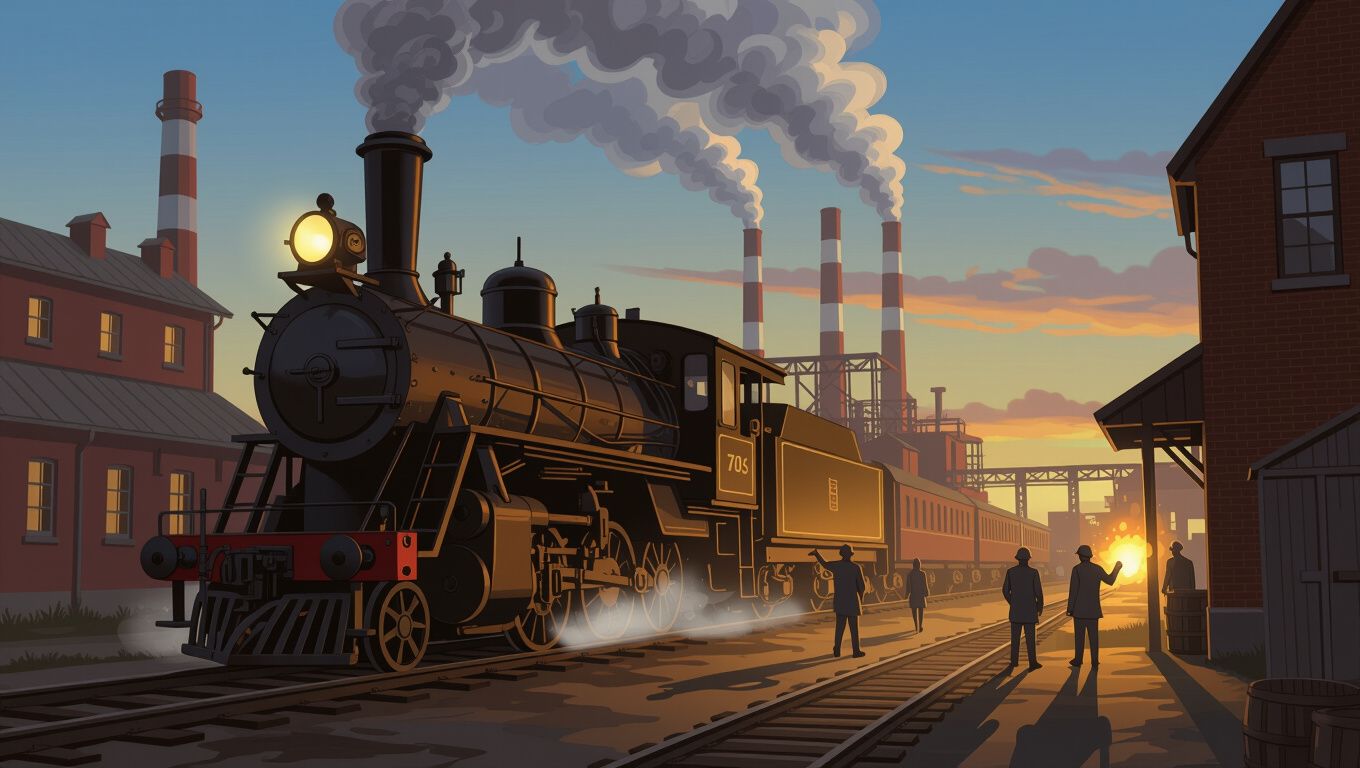
The historical evolution of the traces back to Britain’s unique confluence of factors in the late 18th century, evolving through distinct phases. Evidence from primary sources, such as patent records and factory ledgers, documents the initial textile boom in Lancashire and Yorkshire, where cotton imports from colonies fueled mechanization. Archaeological findings from sites like Ironbridge Gorge reveal early ironworks powered by coke-smelling processes, reducing fuel costs dramatically. By the 1830s, railways exemplified expansion, with George Stephenson’s Rocket locomotive symbolizing mobility’s role in market integration. The Revolution spread to continental Europe—Belgium in the 1790s, France post-Napoleonic Wars—and the United States by the 1820s, evidenced by Lowell mills in Massachusetts. Quantitative data from censuses show population surges:Britain’s from 6 million in 1750 to 21 million by 1851, driven by declining mortality post-1800 due to sanitation improvements. Parliamentary reports like the Sadler Committee’s 1832 testimony on child labor provide poignant qualitative evidence of human costs, corroborating wage data indicating real income rises after initial dips. This evidence base, bolstered by cliometric analyses of GDP growth rates—averaging 2% annually in Britain versus 0.5% pre-Revolution—affirms the era’s transformative scale.
2.3 Theoretical Models & Frameworks
Theoretical models framing the abound, with Walt Rostow’s “Stages of Economic Growth” positing it as the “take-off” phase toward high mass consumption, driven by investment surpassing 10% of GNP. Marxist frameworks, as in Eric Hobsbawm’s works, view it as capitalist primitive accumulation, expropriating peasants to create a wage-labor reserve army, leading to class struggle. Neoclassical economists like Robert Solow emphasize total factor productivity gains from technology, modeled via his growth equation where output growth derives from capital, labor, and exogenous technical progress. Institutional theories, advanced by Douglass North, highlight secure property rights and state policies enabling entrepreneurship. Unified growth theory by Oded Galor integrates demographics, positing a transition from Malthusian traps to sustained growth via human capital accumulation. These frameworks, often tested against econometric data, provide lenses for dissecting causal chains—from enclosures accelerating urbanization to patent laws spurring invention—illuminating why Britain led and how diffusion occurred unevenly.
3. Mechanisms, Processes & Scientific Analysis
3.1 Physiological Mechanisms & Biological Effects
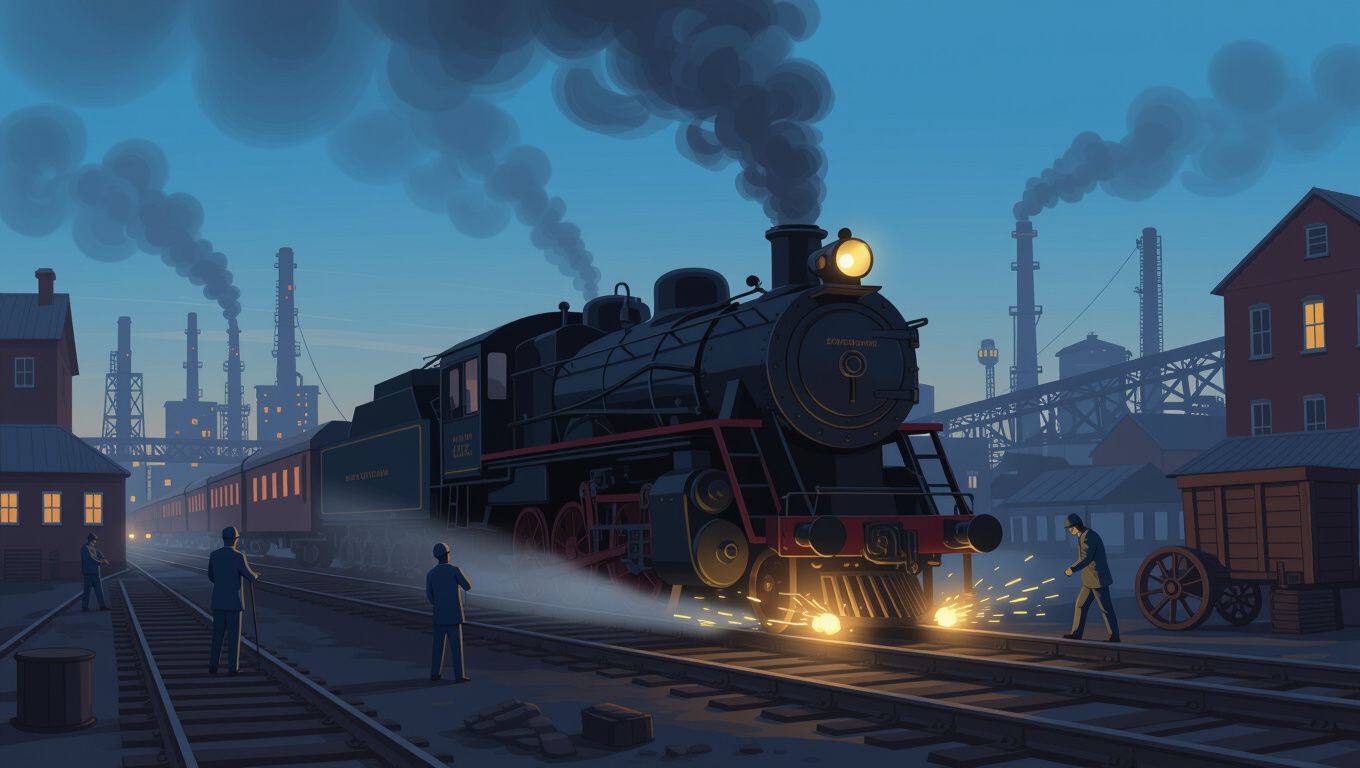
Physiological mechanisms of the profoundly impacted human biology, primarily through grueling factory regimens and environmental exposures. Long hours—often 14-16 daily—induced chronic fatigue, musculoskeletal disorders from repetitive tasks, and respiratory ailments from coal dust and textile fibers, as evidenced by elevated tuberculosis rates in Manchester autopsies. Nutritional shifts saw calorie surpluses from cheaper bread but deficiencies in proteins, leading to stunted growth in child workers, with anthropometric studies showing height declines until the 1840s. Pollution mechanisms involved sulfur dioxide from factories causing acid rain and lung irritation, while urban crowding fostered cholera epidemics via fecal-oral transmission, killing thousands in 1832. Biological adaptations included selection pressures favoring respiratory resilience, per genetic analyses of 19th-century skeletons. Positive effects emerged later:vaccination drives and sanitation engineering reduced infant mortality from 150/1000 to under 100 by 1900, enhancing life expectancy. These mechanisms underscore a dual trajectory—initial physiological stress yielding long-term health gains through medical industrialization.
3.2 Mental & Psychological Benefits
Mental and psychological dimensions of the revealed both burdens and benefits, reshaping cognitive landscapes. Initial stressors included alienation from craft work, as Karl Marx described in “estrangement,” fostering anxiety and depression amid monotonous assembly lines. Urban migration induced “homesickness” and social dislocation, with asylum admissions rising 300% in early 19th-century England. Yet, psychological benefits accrued:rising literacy from compulsory schooling laws post-1870 enhanced self-efficacy and aspiration, per surveys of worker autobiographies. Economic security from wage increases—real wages doubling by 1850—alleviated chronic poverty fears, promoting mental resilience. Community formation in industrial towns, via chapels and unions, provided social buffers against isolation. Modern psychological frameworks, like Seligman’s learned optimism, retroactively explain how technological mastery instilled agency, countering fatalism. Neuroscientific parallels today link such environments to dopamine rewards from innovation, suggesting the Revolution inadvertently boosted adaptive mental traits for modernity.
3.3 Current Research Findings & Data Analysis
Contemporary research leverages big data and cliometrics to refine understandings of dynamics. Findings from the Clark-University project analyze probate inventories, revealing capital deepening in agriculture preceding factories. GDP reconstructions by Allen et al. quantify Britain’s per capita growth at 0.4% pre-1760 versus 1.4% post, attributing 75% to total factor productivity. Panel data regressions across European regions identify coal proximity and literacy as predictors of industrialization timing. Recent studies on gender, using workhouse records, show women’s labor force participation peaking at 40% in textiles, challenging male-breadwinner myths. Machine learning analyses of parliamentary debates uncover policy pivots toward free trade. These findings, robust to endogeneity via instrumental variables like colonial trade shocks, affirm high-wage economies accelerated mechanization, while global inequality widened, with Asia’s deindustrialization per Bairoch’s estimates.
4. Applications & Implications
4.1 Practical Applications & Use Cases
Practical applications of insights permeate modern industry, informing strategies in manufacturing and policy. Use cases include lean production at Toyota, echoing division of labor for efficiency gains of 30-50%. Supply chain models draw from canal-rail integrations, optimizing logistics via AI simulations. Energy transitions mirror coal-to-steam shifts, applied in renewables scaling, as in China’s solar dominance. Urban planning incorporates Manchester lessons, designing green belts to mitigate sprawl. In education, vocational training revives apprenticeship models, boosting employability in automation eras. Developing nations like Vietnam apply export-led growth, achieving 7% annual GDP rises akin to 19th-century Britain, via special economic zones.
4.2 Implications & Benefits
Implications extend to global prosperity, with benefits including poverty eradication—global extreme poverty falling from 90% in 1820 to under 10% today—and technological convergence enabling leapfrogging in Africa via mobile banking. Societally, it democratized goods, from cheap clothing to appliances, enhancing welfare. Environmentally, while initial degradation was severe, it seeded abatement technologies like scrubbers. Politically, mass enfranchisement followed labor mobilizations, fostering democracies. Long-term, human capital amplification sustains innovation cycles, positioning the Revolution as the root of modernity’s abundance.
5. Challenges & Future Directions
5.1 Current Obstacles & Barriers
Challenges in studying and applying lessons include data scarcity for non-elite experiences, biasing towards elite narratives. Measurement barriers persist in valuing intangibles like skill acquisition. Ideological divides—optimists versus pessimists on living standards—hinder consensus. Modern parallels face automation-induced joblessness and inequality, echoing Luddite fears, with Gini coefficients rising in advanced economies.
5.2 Emerging Trends & Future Research
Emerging trends link to Industry 4.0, integrating AI and IoT for cyber-physical systems. Future research should employ genomics for biological legacies and spatial econometrics for diffusion patterns. Climate modeling of historical emissions informs net-zero paths, while comparative studies with Asia’s rise probe universality.
6. Comparative Data Analysis
Comparative analysis reveals Britain’s lead:textile output surged 10-fold by 1830 versus France’s 3-fold, per Landes data, due to wage-price gaps incentivizing machines. Versus Japan’s Meiji era, Britain lacked state direction but excelled in private invention. US data show faster diffusion, with iron production overtaking Britain by 1900 via resource abundance. Wages:British skilled at £1/week versus Indian 10 pence, explaining divergence. Life expectancy:Manchester 1840s at 30 years versus rural 40, closing post-1870. These metrics highlight institutional variances shaping trajectories.
7. Conclusion
The ‘s multifaceted impacts—from physiological strains to psychological evolutions—underscore its role as humanity’s pivotal modernization engine. Balancing costs and benefits, it propelled unprecedented progress, informing sustainable paths forward.
8. References
Allen, R. C. (2009). The British in Global Perspective. Cambridge University Press.
Hobsbawm, E. J. (1962). The Age of Revolution:Europe 1789-1848. Weidenfeld & Nicolson.
Landes, D. S. (1969). The Unbound Prometheus:Technological Change and Industrial Development in Western Europe from 1750 to the Present. Cambridge University Press.
Mokyr, J. (2009). The Enlightened Economy:An Economic History of Britain 1700-1850. Yale University Press.
Rostow, W. W. (1960). The Stages of Economic Growth:A Non-Communist Manifesto. Cambridge University Press.