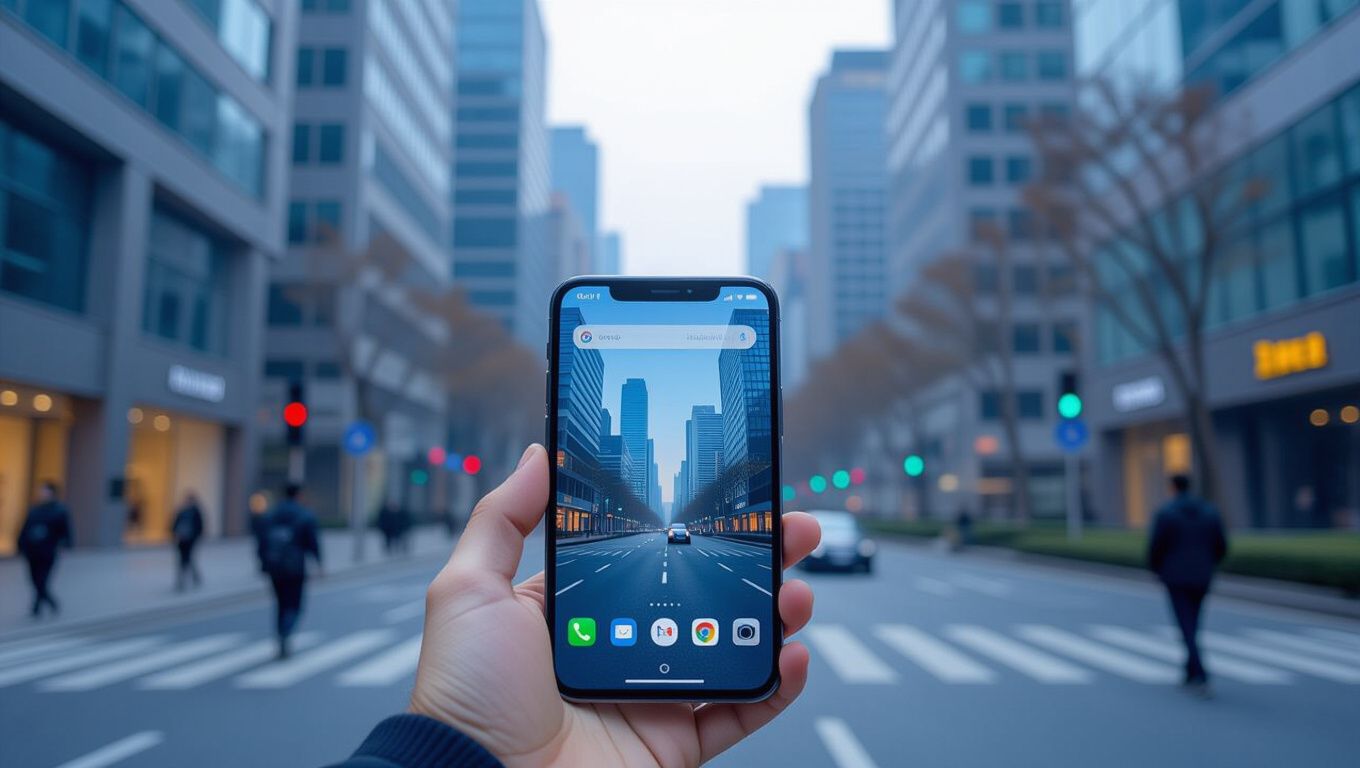
The Mobile Industry in 2025
In 2025, the mobile industry stands as the cornerstone of global connectivity, powering everything from everyday communication to revolutionary enterprise solutions. This dynamic sector, fueled by rapid advancements in technology, has transformed smartphones into indispensable tools for billions worldwide. As we delve into its current landscape, explore emerging trends, and forecast future innovations, it becomes clear that the mobile industry is not just evolving—it is redefining human interaction with the digital world.
- Table of Contents
- 1. The Evolution of the Mobile Industry
- 2. Cutting-Edge Technologies Driving the Mobile Industry
- 3. Global Market Trends and Key Statistics in 2025
- 4. Challenges and Future Prospects in the Mobile Sector
- Conclusion
The Evolution of the Mobile Industry
The mobile industry has undergone a remarkable transformation since its inception, evolving from bulky analog devices in the 1980s to sleek, AI-powered smartphones dominating daily life in 2025. This journey reflects relentless innovation in mobile technology, driven by consumer demand for faster, smarter, and more integrated experiences. Key milestones include the launch of the first commercial smartphone, the IBM Simon in 1994, and the iPhone’s debut in 2007, which popularized touchscreens and app ecosystems.
From Feature Phones to Smartphones
Feature phones peaked in the early 2000s, offering basic calling, texting, and simple games. The shift to smartphones accelerated with Android’s open-source platform in 2008, fostering competition and customization. By 2025, over 95% of mobile devices are smartphones, according to GSMA data, enabling seamless integration with cloud services and IoT ecosystems.
- Key drivers: Affordable hardware, high-speed internet, and app stores like Google Play and Apple App Store.
- Impact: Global mobile subscriptions reached 8.9 billion in 2025, surpassing the world’s population.
Case Study: Apple’s Ecosystem Dominance
Apple’s iOS ecosystem exemplifies the mobile industry’s maturation. With the iPhone 16 series in 2025 featuring advanced neural engines for on-device AI, Apple commands a 28% global market share. Their services revenue, including Apple Music and iCloud, hit $100 billion annually, showcasing how the mobile industry has pivoted toward recurring revenue models.
Practical advice for businesses: Invest in cross-platform app development to tap into both iOS and Android user bases, ensuring compatibility with foldable screens and AR features emerging in 2025 devices.
Cutting-Edge Technologies Driving the Mobile Industry
In 2025, technology within the mobile industry is advancing at breakneck speed, with innovations like 6G connectivity, foldable displays, and edge AI redefining device capabilities. These developments enhance performance, battery life, and user privacy, making mobile devices central to emerging paradigms such as the metaverse and autonomous systems. Manufacturers like Samsung and Huawei lead with integrated quantum-resistant security and sustainable materials.
5G and Beyond: Connectivity Revolution
While 5G coverage reached 85% globally by mid-2025, early 6G trials promise sub-millisecond latency for holographic calls and real-time VR. Ericsson reports that 6G will enable 1 Tbps speeds, transforming the mobile industry into a backbone for Industry 4.0.
- Enhanced mobile broadband for 8K streaming.
- Massive IoT connectivity for smart cities.
- Ultra-reliable low-latency for remote surgeries.
Actionable tip: Enterprises should upgrade to 5G-compatible infrastructure now to future-proof operations against 6G rollout expected by 2028.
AI and Machine Learning Integration
AI is ubiquitous in 2025 mobile technology, with on-device processing reducing cloud dependency. Google’s Tensor G4 chip in Pixel 9 processes natural language queries offline, while Qualcomm’s Snapdragon 8 Gen 5 supports generative AI for personalized content creation. This shift boosts the mobile industry’s efficiency, with AI-driven cameras achieving computational photography indistinguishable from professional DSLRs.

The Mobile Industry in 2025
Sustainable and Foldable Innovations
Sustainability is paramount, with 70% of new devices using recycled materials per IDC reports. Foldables like the Samsung Galaxy Z Fold 7 feature 8-inch inner displays with under-display cameras, expanding the mobile industry into laptop-replacement territory.
Example: Oppo’s eco-friendly Find X8 series uses bio-based plastics, reducing carbon footprints by 30%.
Global Market Trends and Key Statistics in 2025
The mobile industry in 2025 generates over $1.2 trillion in revenue, per Statista, driven by premium segments and emerging markets. Shipments total 1.45 billion units, a 2% YoY growth, with Asia-Pacific leading at 45% market share. Premium devices above $800 account for 25% of sales, reflecting consumer willingness to invest in advanced technology.
Regional Breakdown and Growth Drivers
- North America: Dominated by Apple (55% share), fueled by AR/VR adoption.
- China: Huawei and Xiaomi lead with 5G patriotism, exporting 40% of global volumes.
- India: 300 million new subscribers in 2025, boosting budget 5G phones from Vivo and Realme.
- Africa: Mobile money transactions hit $1 trillion, per GSMA’s Mobile Economy 2025 report.
Consumer Behavior Shifts
Post-pandemic, users prioritize privacy and health tech. Wearables integrated with mobiles, like Apple’s Watch Series 11 with blood glucose monitoring, see 20% adoption. E-commerce via mobile apps constitutes 60% of global sales, underscoring the industry’s e-commerce pivot.
Case study: Reliance Jio in India disrupted the market with affordable 5G plans, adding 100 million users in two years and inspiring similar models in Brazil and Indonesia.
Practical advice: Marketers should leverage AI analytics from mobile data to personalize campaigns, increasing conversion rates by up to 35%.
Challenges and Future Prospects in the Mobile Sector
Despite its growth, the mobile industry faces hurdles like supply chain disruptions, regulatory pressures, and cybersecurity threats. Chip shortages from geopolitical tensions have eased but persist, while EU’s Digital Markets Act enforces fair competition among tech giants. Looking ahead, quantum computing and brain-computer interfaces promise to elevate mobile technology further.
Major Challenges
- E-waste: 6.5 billion devices retired annually; recycling rates at 20%.
- Privacy concerns: Data breaches cost $4.5 billion in 2025.
- Digital divide: 2.6 billion people offline, per ITU.
Innovations on the Horizon
By 2030, expect solid-state batteries doubling life to 3 days and neuromorphic chips mimicking human brains. The mobile industry will converge with automotive via Android Auto evolutions and health via implantable sensors.
Actionable strategies:
- Adopt circular economy models for device trade-ins.
- Implement zero-trust security architectures.
- Partner with telcos for rural 6G coverage.
Case study: Nokia’s 6G research lab collaborates with universities, patenting terahertz spectrum tech for ultra-high bandwidth.
Conclusion
The mobile industry in 2025 exemplifies technology’s transformative power, connecting billions while pushing boundaries in AI, connectivity, and sustainability. From market dominance by innovators like Apple and Samsung to grassroots revolutions in emerging economies, this sector continues to drive global progress. As challenges like e-waste and privacy evolve alongside opportunities in 6G and beyond, stakeholders must prioritize ethical innovation.
To thrive in this landscape, businesses and consumers alike should stay proactive: audit your mobile tech stack for AI readiness, explore sustainable device options, and monitor regulatory shifts. Subscribe to industry newsletters or join forums like GSMA for the latest insights—position yourself at the forefront of the mobile industry’s next wave today.