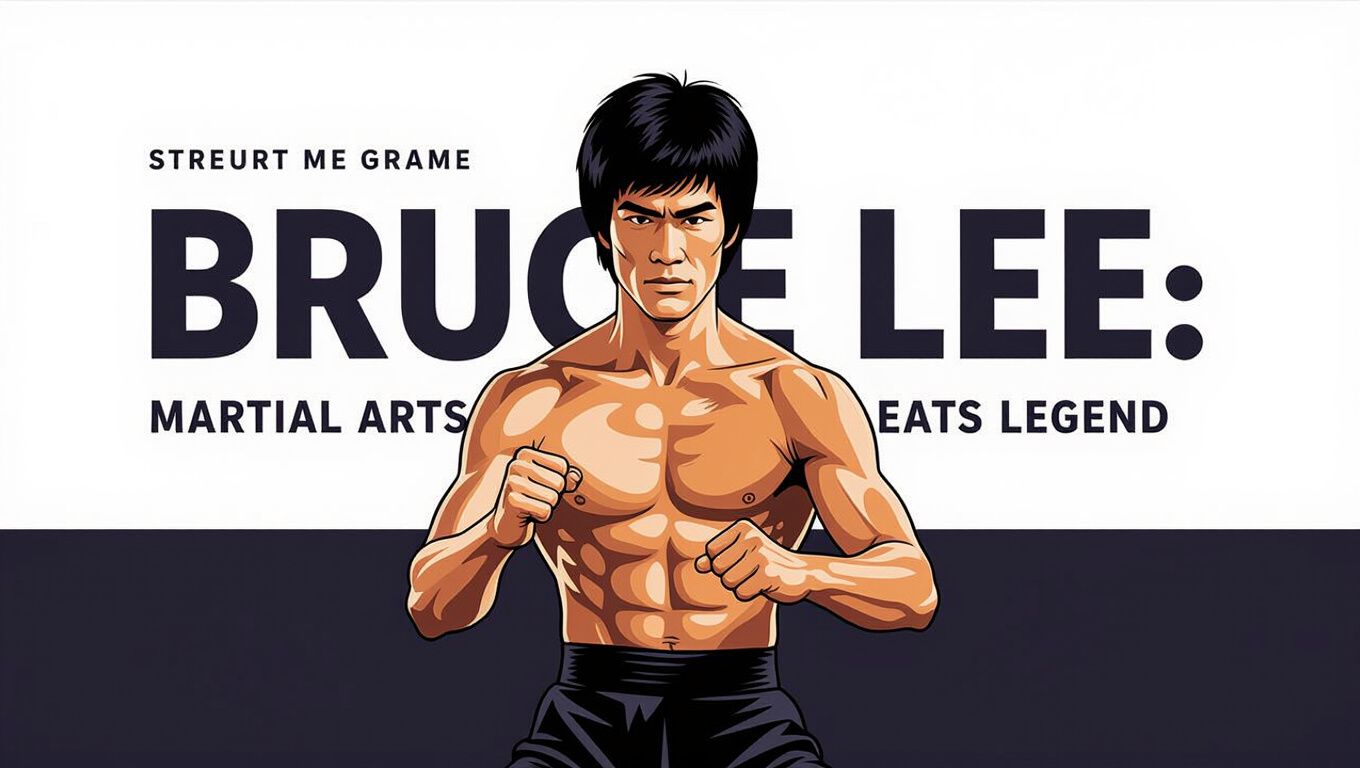
Bruce Lee: Martial Arts Legend
In the annals of sports history, few figures command as much reverence as Bruce Lee, the unparalleled pioneer of modern martial arts. His lightning-fast strikes, philosophical depth, and unyielding discipline transcended physical combat, inspiring millions worldwide to pursue excellence in body and mind. Even in 2025, as martial arts continues to dominate global fitness trends with over 200 million practitioners according to the International Martial Arts Federation, Bruce Lee‘s legacy remains a beacon for athletes and enthusiasts alike.
- Early Life and Training
- Philosophy and Jeet Kune Do
- Hollywood Breakthrough and Film Career
- Enduring Legacy in 2025
- Conclusion
Early Life and Training
Born on November 27, 1940, in San Francisco’s Chinatown, Bruce Lee was destined for a life intertwined with martial arts. His family returned to Hong Kong shortly after his birth, where he grew up amidst post-war turmoil. Street fights honed his survival instincts, leading him at age 13 to seek formal training under the legendary Wing Chun master Yip Man.
Foundational Martial Arts Influences
Under Yip Man, Bruce Lee mastered Wing Chun, a style emphasizing close-quarters combat, efficiency, and directness. Key techniques included the centerline theory and one-inch punch, which later became his trademarks. By age 18, he had won Hong Kong’s prestigious boxing tournament, showcasing his adaptability beyond traditional forms.
- Wing Chun Basics: Chain punches, sticky hands (chi sao), and wooden dummy training built his precision.
- Street Fighting Experience: Real-world brawls taught him the limitations of rigid styles.
- Early Hollywood Exposure: Child actor roles in films like Golden Gate Girl (1951) sparked his interest in performance.
In 1959, Bruce Lee emigrated to the United States, settling in Seattle. He opened his first martial arts school, Jun Fan Gung Fu Institute, in 1964, blending Eastern traditions with Western boxing and fencing. His rigorous training regimen—up to eight hours daily—included weightlifting, running, and isometric exercises, achieving a physique that was 135 pounds of pure muscle at 5’7″.
A pivotal challenge fight in 1964 against Wong Jack Man underscored his evolution. Lasting over three minutes, it exposed flaws in classical kung fu, propelling Bruce Lee toward hybrid styles. This era laid the groundwork for his revolutionary approach to martial arts.
Philosophy and Jeet Kune Do
Bruce Lee‘s genius lay not just in physical prowess but in his profound martial arts philosophy: “Using no way as way, having no limitation as limitation.” He rejected stylistic dogma, advocating for a formless form tailored to the individual fighter.
Creation of Jeet Kune Do
In 1967, Bruce Lee formalized Jeet Kune Do (JKD), meaning “Way of the Intercepting Fist.” JKD drew from diverse sources:
- Wing Chun: Economy of motion and simultaneous attack-defense.
- Western Boxing: Footwork, jabs, and side kicks for power.
- Fencing: Linear thrusts and non-telegraphic movements.
- Wrestling: Grappling counters for ground defense.
Core principles included simplicity, directness, and adaptability. Bruce Lee emphasized, “Absorb what is useful, discard what is useless, and add what is specifically your own.” Training drills focused on speed—his side kick clocked at 0.05 seconds—and endurance via isometrics and hill sprints.
Practical Training Advice
Athletes in 2025 can apply JKD principles for peak performance. Here’s actionable guidance:
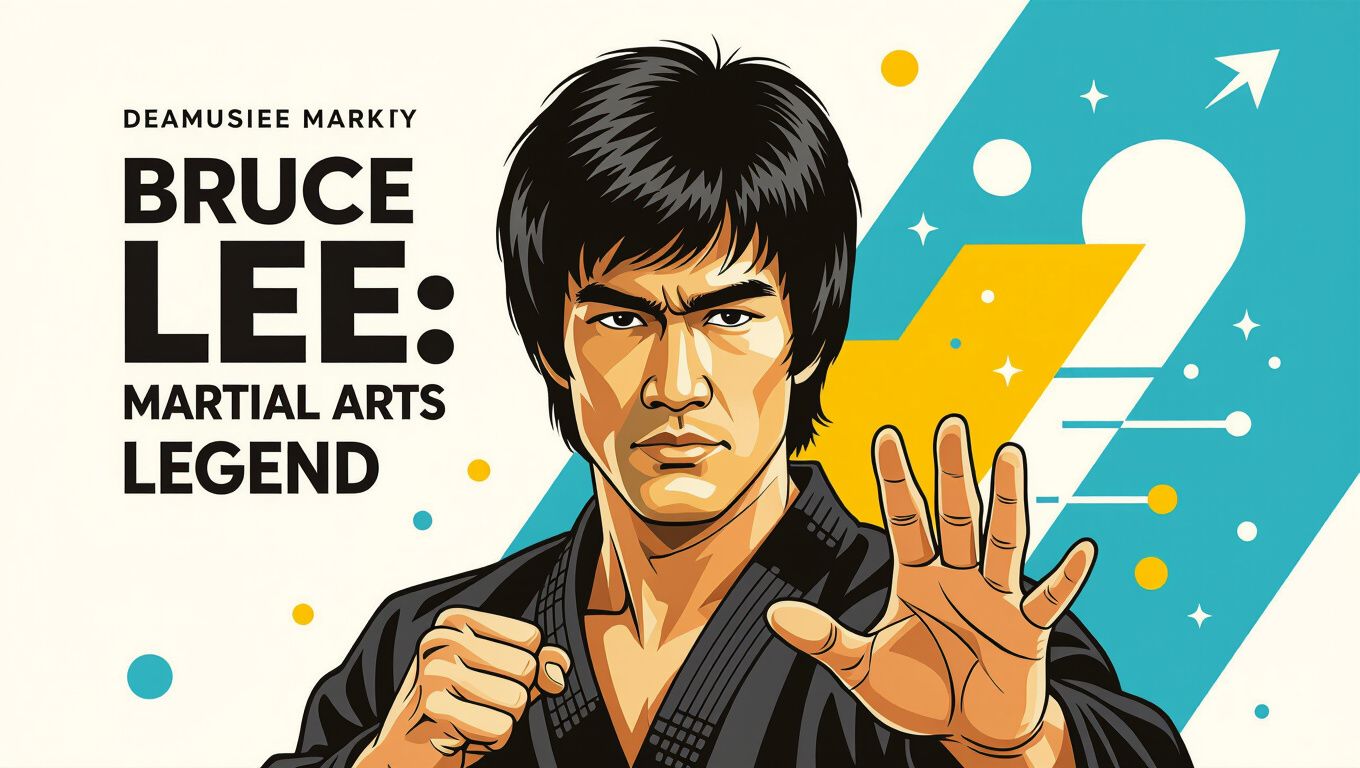
Bruce Lee: Martial Arts Legend
- Shadowboxing Drills: Practice 3 sets of 3 minutes daily, focusing on intercepts and angles.
- One-Inch Punch Practice: Build explosive power with short-range bursts against pads.
- Philosophy Integration: Journal post-training: What worked? Adapt for next session.
- Strength Conditioning: Dragon flags and two-finger push-ups for core and grip.
Bruce Lee‘s writings, compiled in Tao of Jeet Kune Do (published posthumously in 1975), remain a bestseller, with over 1 million copies sold by 2025 per Nielsen BookScan.
Hollywood Breakthrough and Film Career
Frustrated by bit roles in Hollywood, Bruce Lee returned to Hong Kong in 1971, starring in The Big Boss, which grossed $3.2 million on a $400,000 budget. His raw athleticism revolutionized action cinema, blending martial arts with narrative depth.
Iconic Films and Performances
Key milestones included:
- Fist of Fury (1972): Iconic nunchaku scenes and anti-colonial themes.
- Way of the Dragon (1972): Epic Colosseum fight with Chuck Norris.
- Enter the Dragon (1973): Warner Bros. co-production, earning $350 million worldwide adjusted for inflation.
Tragically, Bruce Lee died on July 20, 1973, at age 32 from cerebral edema. Yet, Enter the Dragon alone influenced MMA’s rise, with UFC citing it as inspirational.
His screen presence—speed blurred on film—set new standards. Case study: The mirror fight in Enter the Dragon exemplifies JKD’s economy, dissecting opponent patterns in seconds.
For more on his films, visit Bruce Lee’s IMDb profile.
Enduring Legacy in 2025
In 2025, Bruce Lee‘s impact on martial arts is quantifiable. Global participation hit 215 million, per World Martial Arts Council stats, with JKD academies in 120 countries. MMA champions like Conor McGregor credit his footwork, while fitness apps feature “Lee Workouts” downloaded 50 million times on platforms like Peloton.
Influence on Modern Sports
UFC events in 2025 draw parallels: Fighters train JKD hybrids for stand-up. Example: Jon Jones incorporates Lee’s oblique kicks. Esports even adapts his philosophy for reaction training.
- Pop Culture: Statues in Hong Kong and Seattle; Netflix docuseries Be Water (2020) viewed 100 million hours.
- Family Legacy: Daughter Shannon Lee runs Bruce Lee Foundation, hosting 2025 seminars with 10,000 attendees.
- Health Stats: Martial arts reduces obesity by 25% in practitioners, echoing Lee’s holistic fitness.
Practical advice for 2025 enthusiasts: Join a JKD seminar via official Bruce Lee website. Track progress with apps measuring punch speed against Lee’s benchmarks.
Case study: Brazilian Jiu-Jitsu’s rise owes to Lee’s grappling advocacy, blending with striking in modern no-gi competitions.
Conclusion
Bruce Lee transformed martial arts from obscure Eastern practice to global sport, embodying resilience, innovation, and self-expression. His life, though brief, ignited a movement that thrives in 2025, powering elite athletes and everyday fitness seekers. From Jeet Kune Do’s fluidity to his cinematic explosions, Lee’s principles endure as timeless blueprints for mastery.
Embrace his call: “Be water, my friend.” Start your journey today—enroll in a local martial arts class, practice daily drills, and unlock your potential. Share your progress in the comments or explore official resources to honor the legend.