Abstract/Executive Summary
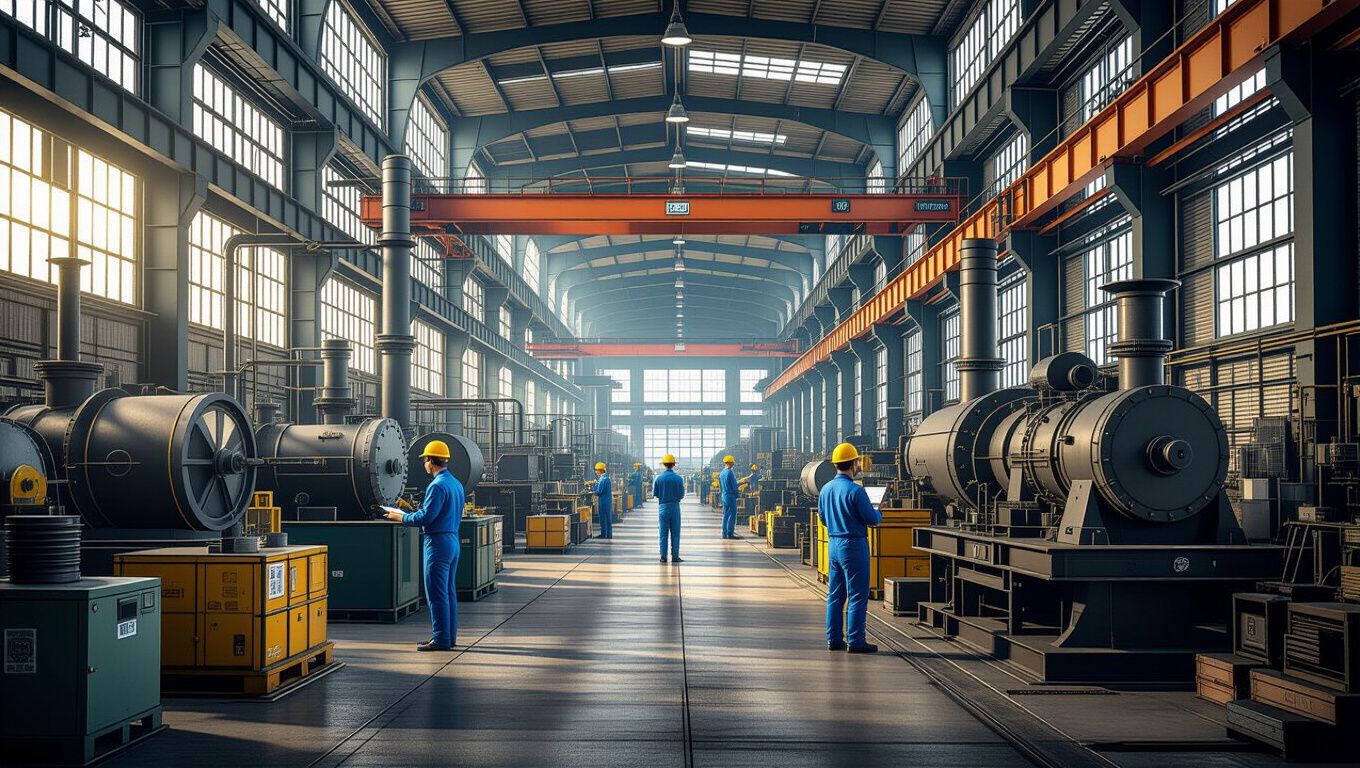
The Industrial Revolution, commencing in late 18th-century Britain, marked a profound transformation in manufacturing, transportation, and socioeconomic structures through mechanization and factory systems. This article elucidates the Industrial Revolution’s foundational concepts, including steam power and textile innovations, alongside mechanisms such as capital accumulation and labor division that propelled its expansion. Analysis reveals the Industrial Revolution’s implications for global urbanization and economic growth, while addressing challenges like environmental degradation and social inequities. Comparative evaluations highlight distinctions between the First and Second Industrial Revolutions, underscoring the Industrial Revolution’s enduring legacy in shaping modern industrial paradigms.
Section 1: Introduction
The Industrial Revolution, originating in Britain around 1760 and extending through the 19th century, represented a seismic shift from agrarian economies to industrialized production. This era of the Industrial Revolution introduced unprecedented technological advancements, fundamentally altering energy utilization and production methodologies. Key catalysts of the Industrial Revolution included population growth and agricultural improvements, which freed labor for factories central to the Industrial Revolution. The Industrial Revolution’s diffusion to Europe and North America amplified its global impact, establishing it as a pivotal historical inflection point.
Section 2: Foundational Concepts
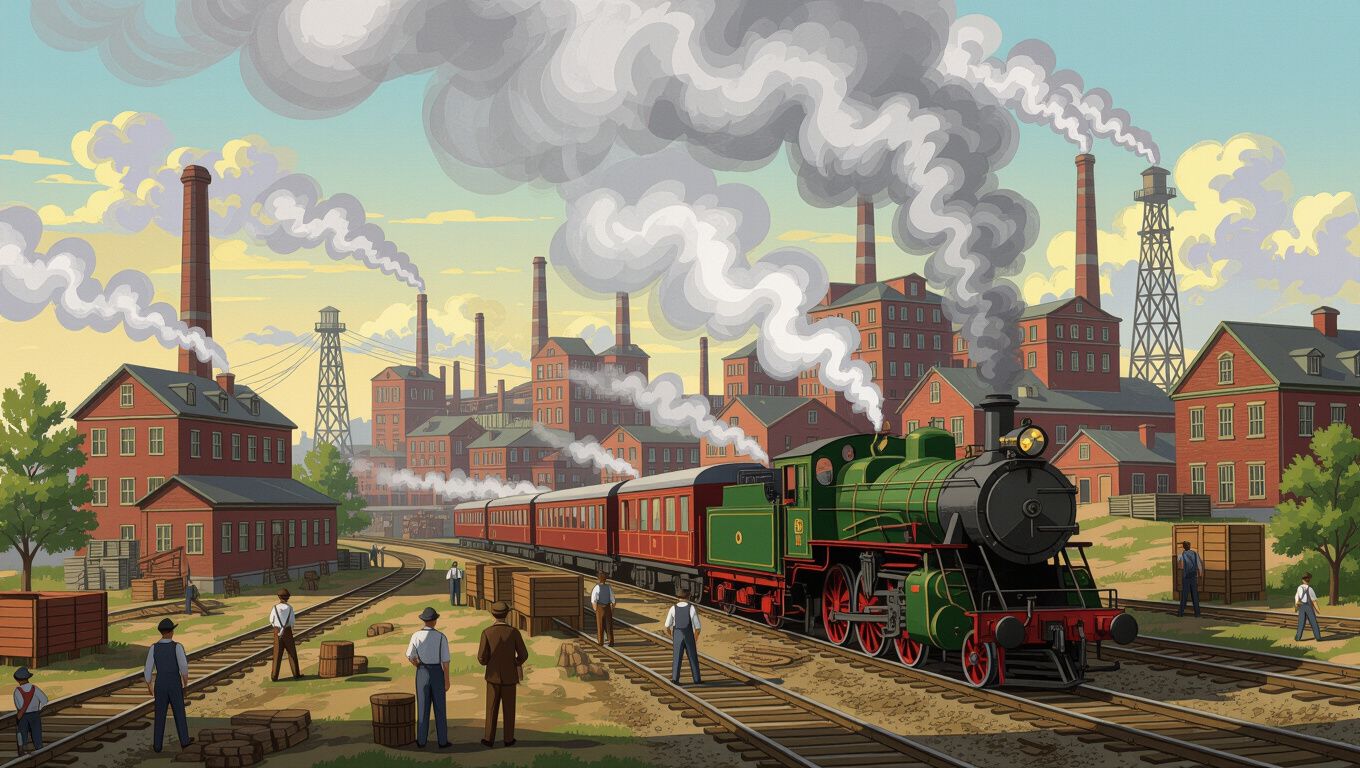
Core to the Industrial Revolution were inventions like James Watt’s steam engine, which revolutionized power sources during the Industrial Revolution by enabling continuous mechanical operation. The spinning jenny and water frame epitomized textile mechanization in the Industrial Revolution, boosting productivity exponentially. Iron production techniques, such as puddling, underpinned infrastructure development intrinsic to the Industrial Revolution. Capitalism’s emergence facilitated investment in Industrial Revolution machinery, while urbanization redefined social fabrics during the Industrial Revolution.
Section 3: Mechanisms & Analysis
Mechanisms driving the Industrial Revolution encompassed division of labor, as theorized by Adam Smith, optimizing factory efficiency within the Industrial Revolution. Capital accumulation through banking systems fueled machinery adoption in the Industrial Revolution. Labor markets evolved with child and female workforce integration, a hallmark of the Industrial Revolution’s social dynamics. Quantitative analysis of Industrial Revolution GDP growth rates demonstrates exponential economic acceleration, with Britain’s output surging 2-3% annually post-1780 amid the Industrial Revolution.
Section 4: Applications & Implications
Applications of the Industrial Revolution extended to transportation via steam locomotives and ships, contracting global trade distances during the Industrial Revolution. Mass production techniques from the Industrial Revolution birthed consumer goods proliferation, elevating living standards selectively. Socioeconomic implications of the Industrial Revolution included class stratification, with a burgeoning middle class amid proletarianization. Environmentally, the Industrial Revolution’s coal dependency initiated anthropogenic climate influences observable today.
Section 5: Challenges & Future
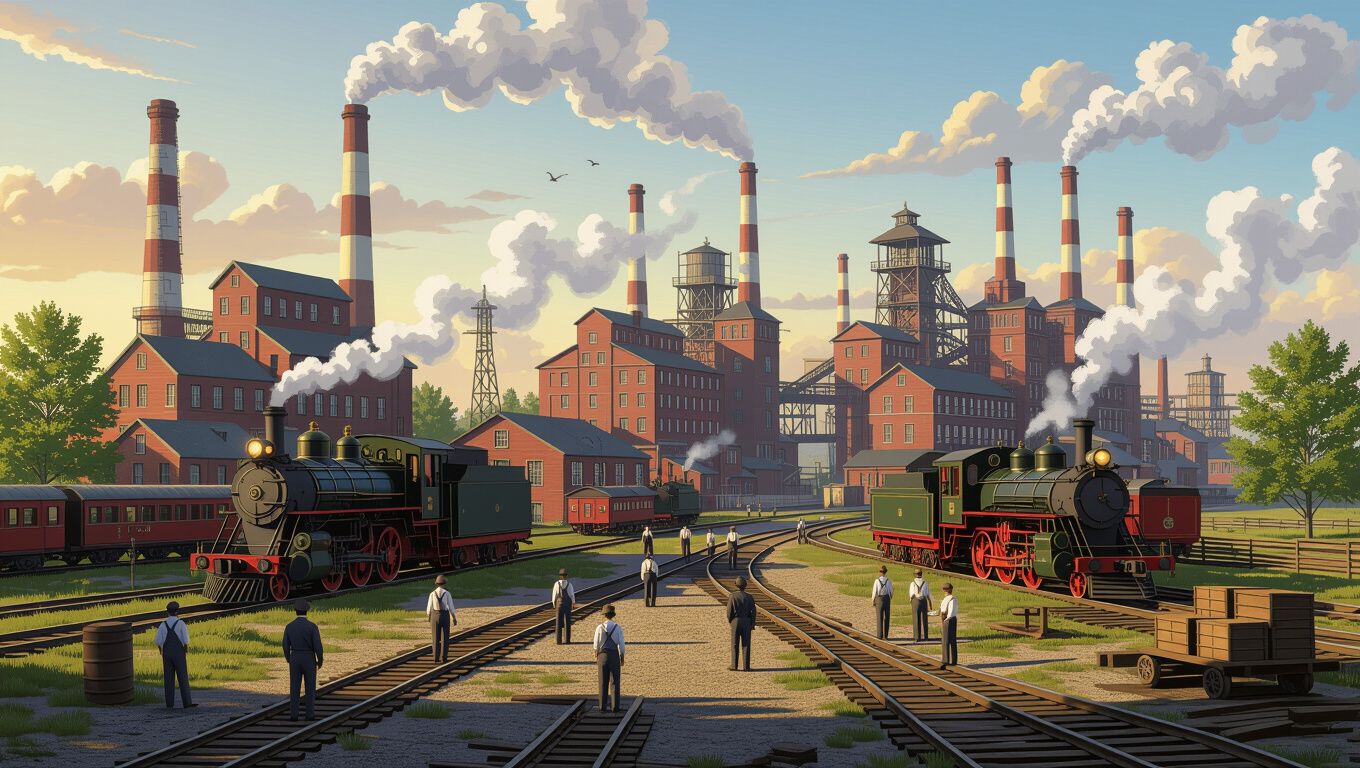
Challenges of the Industrial Revolution encompassed exploitative working conditions, spurring labor movements like Luddism against unchecked mechanization in the Industrial Revolution. Pollution from Industrial Revolution factories precipitated urban health crises, including cholera outbreaks. Future trajectories post-Industrial Revolution evolved into automation eras, yet unresolved inequities from the Industrial Revolution persist in global disparities. Anticipating a Fourth Industrial Revolution, lessons from the original Industrial Revolution inform sustainable technological integration.
Section 6: Comparison Table
| Aspect | First Industrial Revolution (1760-1840) | Second Industrial Revolution (1870-1914) |
|---|---|---|
| Primary Energy Source | Steam (coal-powered) central to early Industrial Revolution mechanics | Electricity and oil expanding Industrial Revolution applications |
| Key Industries | Textiles and iron pivotal in initial Industrial Revolution phase | Steel, chemicals, and automobiles advancing Industrial Revolution scope |
| Social Impact | Urbanization and factory labor defining Industrial Revolution society | Unionization and welfare reforms mitigating Industrial Revolution excesses |
| Geographic Focus | Britain-led diffusion of Industrial Revolution innovations | USA and Germany dominating later Industrial Revolution waves |
Section 7: Conclusion
The Industrial Revolution irrevocably reshaped human civilization through technological ingenuity and economic reconfiguration. Its foundational concepts and mechanisms catalyzed unprecedented prosperity, notwithstanding profound challenges. Implications of the Industrial Revolution continue to influence contemporary globalization and innovation trajectories. Ultimately, comprehending the Industrial Revolution equips societies to navigate future industrial evolutions judiciously.