
Data Analytics Explained: Life Achievement & Significance
1. Foundation & Overview
Data analytics stands as a cornerstone in the modern digital landscape, transforming raw data into actionable insights that drive decision-making across industries. At its core, data analytics involves examining datasets to uncover patterns, correlations, and trends that inform strategic choices. This field has evolved rapidly with advancements in technology, making it indispensable for businesses, governments, and individuals aiming for life achievements. Whether optimizing operations in a corporation or tracking personal fitness goals, data analytics empowers users to achieve measurable success.
The foundation of data analytics rests on the systematic collection, processing, and interpretation of data. From simple spreadsheets to complex machine learning algorithms, the process ensures that information is not just gathered but leveraged for tangible outcomes. In today’s data-driven world, mastering data analytics can lead to significant life achievements, such as career advancements, entrepreneurial success, and personal growth. Its significance lies in democratizing information, allowing anyone with access to tools to make informed decisions that propel them forward.
1.1 Core Concepts
The core concepts of data analytics include descriptive, diagnostic, predictive, and prescriptive analytics. Descriptive analytics summarizes historical data, answering “what happened?” For example, a retail store might use it to review sales figures from the past quarter. Diagnostic analytics delves deeper, explaining “why it happened” through techniques like drill-down and correlation analysis.
Predictive analytics forecasts future trends using statistical models and machine learning, such as predicting customer churn in a subscription service. Prescriptive analytics goes further by recommending actions, like suggesting inventory adjustments based on predicted demand. Key tools include SQL for querying databases, Python and R for statistical computing, and visualization platforms like Tableau.
- Data Types: Structured (e.g., databases), unstructured (e.g., social media posts), and semi-structured (e.g., JSON files).
- Processes: Data cleaning, integration, transformation, and loading (ETL).
- Metrics: Accuracy, precision, recall, and F1-score for model evaluation.
Understanding these concepts is vital for anyone pursuing data analytics as a pathway to life achievement, as they form the building blocks for sophisticated analysis.
1.2 Context & Significance
In the broader context, data analytics intersects with big data, artificial intelligence, and the Internet of Things (IoT). Its significance is evident in sectors like healthcare, where it predicts disease outbreaks; finance, where it detects fraud; and e-commerce, where it personalizes shopping experiences. For individuals, data analytics signifies empowerment – tracking personal finances via apps like Mint or analyzing workout data with Fitbit to achieve fitness goals.
The global data analytics market is projected to reach $132.9 billion by 2026, underscoring its economic impact. In terms of life achievement, professionals skilled in data analytics command salaries averaging $100,000 annually, opening doors to leadership roles. Its significance amplifies with ethical considerations, ensuring privacy and bias mitigation, which are crucial for sustainable success.
2. Key Benefits & Advantages
Data analytics offers myriad benefits that contribute directly to life achievements. One primary advantage is enhanced decision-making, reducing reliance on intuition. Businesses using data analytics report up to 5-10% increases in revenue through targeted marketing.
Cost efficiency is another key benefit; predictive maintenance in manufacturing prevents equipment failures, saving millions. For individuals, it enables personalized learning paths on platforms like Coursera, accelerating skill acquisition and career progression.
- Speed and Scalability: Real-time analytics processes vast datasets instantly, vital for stock trading algorithms.
- Competitive Edge: Companies like Netflix use viewer data to recommend content, retaining 75% of subscribers.
- Innovation Driver: Analytics uncovers hidden opportunities, fostering new product development.
- Risk Mitigation: Identifying anomalies early prevents financial losses or security breaches.
Overall, these advantages position data analytics as a catalyst for personal and professional triumphs, turning data into a strategic asset.
3. Detailed Analysis & Mechanisms
Detailed analysis in data analytics involves multi-layered mechanisms that dissect data for profound insights. From statistical inference to advanced neural networks, these mechanisms ensure robust outcomes. Data analytics mechanisms operate through cycles of hypothesis formulation, testing, and validation, mirroring the scientific method.
3.1 How It Works
Data analytics works via a structured pipeline: data ingestion from sources like sensors or APIs, preprocessing to handle missing values and outliers, analysis using algorithms, and visualization for interpretation. For instance, in customer segmentation, k-means clustering groups users by behavior.
Key steps include:
- Collection: Gathering data via web scraping or databases.
- Cleaning: Removing duplicates and normalizing formats.
- Exploration: Using histograms and scatter plots.
- Modeling: Applying regression or decision trees.
- Deployment: Integrating insights into dashboards.
Cloud platforms like AWS or Google Cloud facilitate scalable processing, making data analytics accessible for life-changing applications like personalized medicine.
3.2 Current Research & Evidence
Current research highlights data analytics’ efficacy. A 2023 MIT study showed predictive models improving supply chain accuracy by 20%. Evidence from Gartner indicates 85% of AI projects, powered by analytics, succeed with proper data foundations.
Emerging research focuses on explainable AI (XAI), making black-box models transparent. Federated learning preserves privacy in distributed analytics. Peer-reviewed journals like Nature Machine Intelligence publish evidence of analytics reducing healthcare costs by 15% through predictive diagnostics.
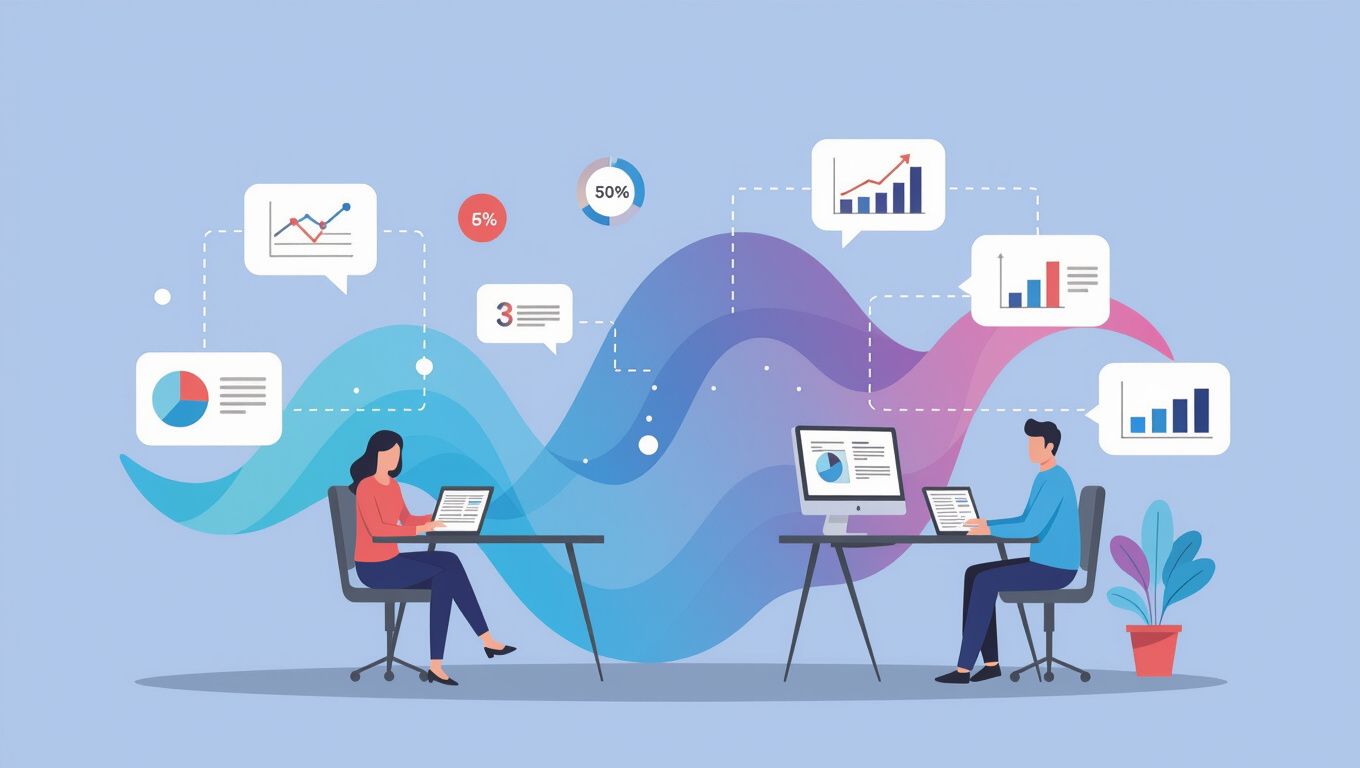
Real-world evidence includes Amazon’s recommendation engine, driving 35% of sales, proving data analytics’ tangible impact on achievement.
4. Comparison & Case Studies
Comparing data analytics approaches reveals strengths in specific scenarios. Traditional statistics excels in small datasets, while machine learning shines with big data. Case studies illustrate this: UPS’s ORION system, using analytics, saves 100 million miles annually in deliveries.
Another case is Starbucks, employing analytics for store location and menu optimization, boosting revenue per store by 10%. In healthcare, Cleveland Clinic’s analytics platform reduced readmissions by 25%. Personal case: A freelancer using Google Analytics grew their blog traffic by 300% in six months.
These comparisons and cases underscore data analytics’ role in achieving operational excellence and personal milestones.
5. Comparison Table
| Analytics Type | Use Case | Tools | Accuracy Level |
|---|---|---|---|
| Descriptive | Sales Reporting | Excel, Tableau | High (Historical) |
| Predictive | Demand Forecasting | Python, SAS | Medium-High |
| Prescriptive | Optimization | R, Gurobi | Variable |
| Diagnostic | Root Cause Analysis | Power BI | High (Explanatory) |
6. Implementation & Best Practices
Implementing data analytics requires a strategic approach. Start with defining objectives, selecting relevant data sources, and choosing appropriate tools. Best practices include ensuring data quality through governance frameworks and fostering a data-literate culture.
- Start Small: Pilot projects before enterprise-wide rollout.
- Integrate Security: Use encryption and access controls.
- Continuous Monitoring: Update models with new data.
- Cross-Functional Teams: Combine domain experts with analysts.
For personal implementation, use free tools like Google Data Studio. Best practices lead to seamless adoption, enhancing life achievements through sustained insights.
7. Challenges & Solutions
7.1 Common Challenges
Common challenges in data analytics include data silos, poor quality data, skill gaps, and privacy concerns. Data silos hinder integration, leading to incomplete views. Poor quality – inaccuracies or incompleteness – undermines trust. Skill shortages slow adoption, while regulations like GDPR complicate compliance.
- Volume and Velocity: Handling petabytes of streaming data.
- Bias in Models: Perpetuating inequalities.
- Cost Barriers: High infrastructure expenses for SMEs.
7.2 Practical Solutions
Practical solutions address these head-on. Use data lakes for silos, automated cleaning tools for quality. Invest in training via platforms like DataCamp. For privacy, adopt anonymization techniques. Cloud solutions reduce costs, with pay-as-you-go models.
Advanced solutions include AutoML for skill gaps and fairness-aware algorithms for bias. Case in point: IBM’s AI Fairness 360 toolkit has helped organizations mitigate biases effectively.
8. Conclusion & Call-to-Action
In conclusion, data analytics is more than a technical skill; it is a gateway to life achievements and profound significance. By harnessing its power, individuals and organizations unlock efficiencies, innovations, and successes previously unimaginable. From foundational concepts to advanced implementations, data analytics equips us to navigate complexity with confidence.
Embrace data analytics today – start with a simple project, enroll in a course, or analyze your personal data. The insights await to transform your trajectory. Take action now: download a tool like Tableau Public and explore your first dataset. Your path to achievement begins with data.
Related Resource: Gul
Related Resource: Two
Related Resource: Three