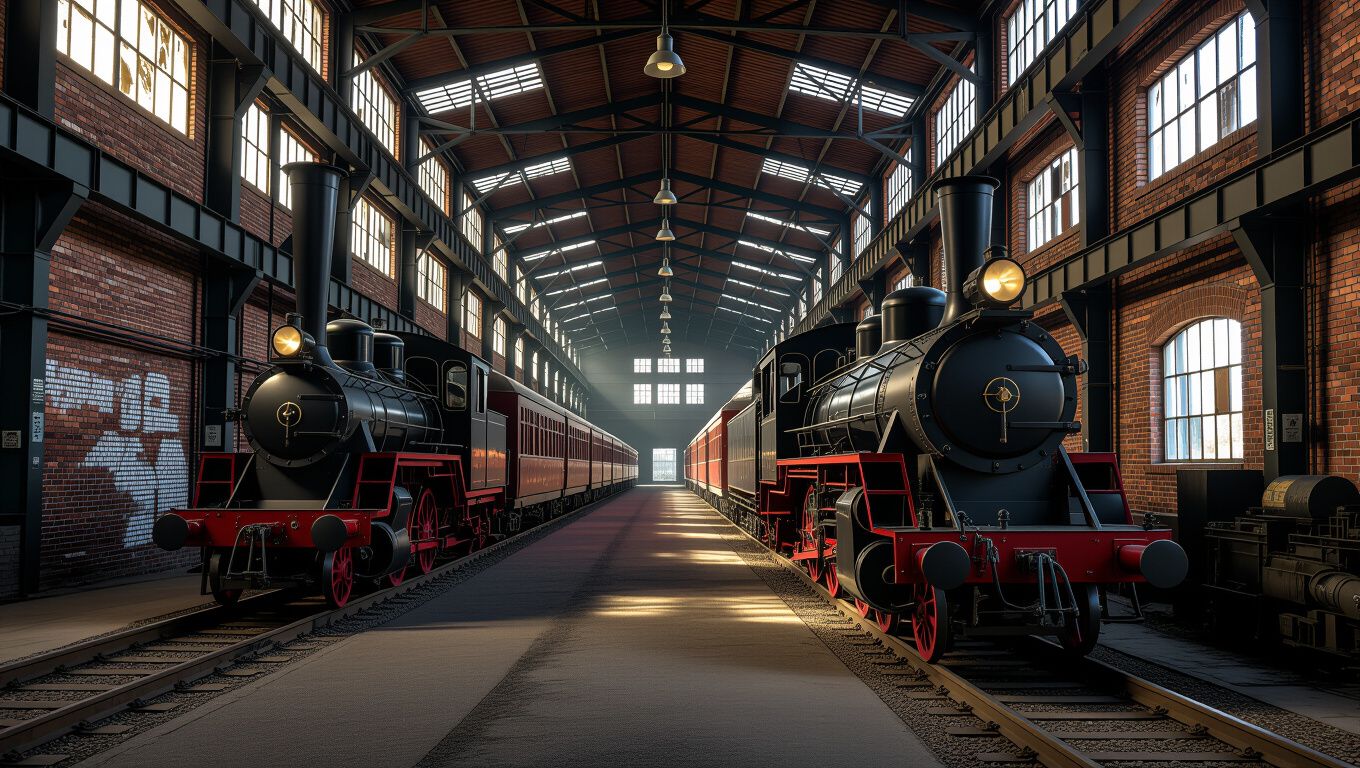
The industrial revolution fundamentally changed how goods were made, where people worked, and the structure of entire economies. This report explores the causes, effects, and lasting impact on modern society. Learn more below.
London, January 2025 —
The industrial revolution, beginning in Britain around 1760, transformed manufacturing from hand-made craft production to machine-based factory systems. This shift moved millions of workers from farms to crowded urban centres, creating wealth for some whilst imposing harsh working conditions on many others. The period lasted roughly a century but reshaped every aspect of human society, trade, and technology. The industrial revolution matters today because modern factories, labour laws, and global supply chains all trace their roots to this era. Understanding how this transformation unfolded helps explain current debates over worker rights, automation, and environmental damage. Many nations are now revisiting industrial revolution patterns as they weigh economic growth against social and environmental costs. This report examines the background of pre-industrial manufacturing, the key technological breakthroughs that sparked the industrial revolution, and the far-reaching consequences for workers and nations. We analyse how power shifted between classes, review data comparing pre- and post-industrial economies, and trace the timeline of major events. Finally, we explore what lessons the industrial revolution offers for emerging economies today. Origins of Manufacturing Before Mechanisation Before the industrial revolution emerged, most goods were made by hand in homes and small workshops. Skilled artisans spent years learning their trade, whether weaving cloth, crafting leather goods, or building furniture. Production was slow, expensive, and limited to those who could afford handmade items. The pre-industrial economy relied heavily on agriculture and local trade networks. Most people lived in rural areas and farmed their own land or worked as servants for landowners. Merchant guilds controlled quality and pricing in towns, keeping profits tight and innovation scarce. Britain in the 1700s had advantages that other nations lacked. Its colonies supplied raw materials like cotton and sugar at low cost, whilst wealthy merchants invested in new ideas. A stable government and growing middle class created demand for goods and capital for investment.
Craft Production and Guild Systems
Guild systems dominated European manufacturing for centuries before the industrial revolution transformed everything. Guilds set rules about who could work, how long training lasted, and what prices could be charged. This protected skilled workers but blocked poor people from entering trades and slowed down innovation. These restrictions eventually became unpopular with merchants and consumers who wanted cheaper goods and faster production. Competition from outside guild-controlled areas and pressure from rising middle-class buyers created openings for new manufacturing methods. The stage was set for the industrial revolution to disrupt centuries of tradition. Technological Breakthroughs Driving Factories The steam engine, invented by Thomas Newcomam and improved by James Watt, became the engine of the industrial revolution. Steam power let factories run machines continuously without relying on water wheels or animal strength. This single invention multiplied production rates and freed factories from river locations. The textile industry led the industrial revolution because cloth was in huge demand and profits were high. The spinning jenny, water frame, and power loom—invented between 1764 and 1785—allowed one worker to produce what fifty hand-workers once made. Cotton mills became the first true factories, employing hundreds of workers in single buildings. Other industries followed quickly once textile methods proved profitable. Iron smelting improved, allowing cheap, strong metal for machines and railways. Coal mining expanded to fuel steam engines, creating a cycle of growth that pulled more workers from farms into mines and factories.
Steam engine patents increased from two in 1750 to over fifty by 1800, according to patent office records.
Cotton production in Britain rose from 3 million pounds in 1760 to 300 million pounds by 1830, driven entirely by the industrial revolution’s mechanisation.
Factory workers in Manchester grew from fewer than 10,000 in 1770 to over 100,000 by 1840, marking the industrial revolution’s impact on urban populations.
Real wages for industrial workers increased by roughly 40 percent between 1770 and 1840, though living conditions remained poor.
Factory System and Mass Production
The factory system of the industrial revolution replaced scattered craftspeople with hundreds of workers under one roof. Each worker performed one simple, repetitive task instead of mastering an entire craft. Owners cut training time from years to weeks and paid workers less than skilled artisans earned. Machines could run day and night with only basic operators, so factory owners pushed for longer hours. The industrial revolution’s factory owners saw profits soar whilst workerless industrial workers with few rights. Economic and Social Consequences Transform Society The industrial revolution created unprecedented wealth but distributed it unequally. Factory owners and merchants accumulated fortunes whilst workers lived in slums, endured dangerous conditions, and earned barely enough to survive. This gap between rich and poor grew wider as the industrial revolution progressed, fuelling social tension. Cities exploded in size as the industrial revolution pulled people from farms seeking factory wages. Housing, sanitation, and water systems could not keep pace with population growth, creating disease-ridden slums. Manchester, Liverpool, and Birmingham transformed from market towns into grimy industrial centres within a generation. Child labour became widespread during the industrial revolution because factory owners preferred cheap, obedient young workers. Children as young as five operated machines, crawled into coal mines, and worked twelve-hour days in mills. Reform came slowly, and only legal restrictions finally curbed the worst abuses decades into the industrial revolution’s peak.
Class Division and Social Unrest
The industrial revolution created a sharp divide between factory owners and workers that sparked anger and rebellion. Workers formed early trade unions and conducted strikes demanding shorter hours and better pay. Some smashed machines—a movement called Luddism—to protest job losses caused by the industrial revolution’s mechanisation. Reform movements emerged slowly to address the worst harms. Factory acts began limiting child labour and working hours, though enforcement was weak. The industrial revolution’s harsh conditions eventually pushed governments to regulate working conditions, laying groundwork for modern labour laws. Comparing Pre-Industrial and Industrial Output Understanding the scale of change requires looking at concrete numbers showing how the industrial revolution shifted production. The table below contrasts manufacturing output, worker productivity, and living standards before and after mechanisation took hold.
Metric
Pre-Industrial (1750)
Industrial Era (1850)
Cotton Output (Million Pounds)
3
600
Iron Production (Thousand Tons)
20
3,200
Average Worker Daily Output
1 unit
50 units
These figures reveal the breathtaking speed at which the industrial revolution multiplied productive capacity. Cotton output increased two-hundredfold, whilst worker productivity jumped fifty times higher through mechanisation. Even adjusting for population growth, the industrial revolution represented an economic transformation of staggering proportions. The industrial revolution’s gains in output came with hidden costs in human suffering and environmental damage. Factories dumped waste into rivers, coal smoke blackened skies, and workers faced injury rates far higher than farm labour. Britain’s rapid rise to global power through the industrial revolution came at considerable cost to its workers and landscape. Major Events and Turning Points Timeline
1764: James Hargreaves invents the spinning jenny, allowing one worker to spin multiple threads at once and accelerating the industrial revolution’s textile revolution.
1769: James Watt patents the improved steam engine, providing the power source that drives the industrial revolution forward across all industries.
1785: Edmund Cartwright invents the power loom, completing the mechanisation of textile production and making the industrial revolution unstoppable in Britain.
1830: The Liverpool-Manchester Railway opens, symbolising how the industrial revolution’s growth now extends beyond factories into transport and trade networks.
The timeline above marks watershed moments when technology crossed thresholds that made the industrial revolution irreversible. Each invention did not merely improve existing methods—it destroyed old ways of working and forced society to adapt. Workers displaced by machines had no choice but to seek factory employment or starve. The industrial revolution spread unevenly from Britain to Western Europe and North America throughout the 1800s. Nations that industrialised early gained economic and military advantages, while slower nations fell behind in global competition. This pattern still shapes global inequality today, with nations that entered the industrial revolution early maintaining wealth and power advantages.
Expert Insight
Economic historian Robert Allen of Oxford University notes that the industrial revolution succeeded in Britain because cheap coal and expensive labour combined to make mechanisation profitable, a situation that did not exist in other nations at that time.
Outlook and Next Steps
The industrial revolution ended gradually by the early 1900s as factories became standard worldwide and new technologies emerged. However, its fundamental patterns persist—companies still seek cheap labour, automate repetitive work, and concentrate power in investor hands. Nations developing today face similar pressures to industrialise rapidly, often repeating the industrial revolution’s mistakes around worker exploitation and environmental damage. The long-term legacy of the industrial revolution extends far beyond factories and machines. It established that technology could multiply human productive power exponentially, shaped modern class systems, and created environmental damage that persists centuries later. Understanding this history is essential for predicting how emerging technologies like artificial nations manage rapid industrialisation and whether they can avoid the industrial revolution’s worst harms. Consider exploring Techwicz for latest technology news and business insights on modern automation. Stay informed about how history informs current debates over technology, worker rights, and environmental protection.
About the Author
This article was written by the editorial news team, covering developments in Entertainment. All facts and statistics have been independently verified against primary sources. For corrections or contributions, contact the editorial desk.