About This Article
Explore the industrial revolution’s transformative impact on manufacturing, society, and technology. Learn how mechanization reshaped economies and created modern industries. Understand its lasting relevance for today’s tech-driven world. Learn more below.
Introduction
The industrial revolution fundamentally transformed human civilization beginning in the 1760s, shifting production from agrarian economies to mechanized manufacturing at an unprecedented scale. Between 1760 and 1840, factory output in Britain increased by over 300 percent, establishing patterns of mass production that would define modern economies for centuries. The industrial revolution introduced steam power, textile machinery, and iron production techniques that replaced traditional craftwork with standardized industrial processes. This period marked humanity’s transition from agriculture-dependent societies to industrially powered nations.
Understanding the industrial revolution remains essential in 2026, as we navigate a new era of technological advancement and automation. Modern supply chains, manufacturing standards, and workforce structures all trace their origins to innovations established during this pivotal historical period. The industrial revolution created the foundational concepts of factories, assembly lines, and mass production that continue shaping global commerce today. This article examines how the industrial revolution unfolded, why it matters, and what lessons it offers for contemporary technological progress.
Table of Contents
What is the Industrial Revolution
The industrial revolution represents a watershed moment when societies shifted from handcraft production to machine-based manufacturing on a massive scale. Beginning in Britain around 1760, this transformation spread across Europe and North America, fundamentally altering how goods were produced, traded, and distributed globally. The industrial revolution introduced the steam engine, mechanized textile looms, and iron smelting innovations that allowed factories to produce goods faster and cheaper than ever before. This economic shift created the modern factory system and established capitalism as the dominant economic model worldwide.
The period witnessed an explosion in technological innovation driven by practical necessity and entrepreneurial ambition. Inventors developed water-powered mills, spinning frames, and power looms that multiplied worker productivity by factors of 10 or more. Population movement from rural areas to industrial cities accelerated dramatically, with Manchester growing from 25,000 residents in 1772 to over 300,000 by 1840. The industrial revolution fundamentally rewired societies, economies, and human labor patterns in ways that persist today.
Origins in Eighteenth Century Britain
Britain possessed unique conditions that sparked the industrial revolution, including abundant coal reserves, established trade networks, and capital accumulated through colonial commerce. The nation’s textile industry particularly benefited from innovations like the spinning jenny invented by James Hargreaves in 1764 and the water frame by Richard Arkwright in 1769. These mechanical innovations allowed a single worker to perform tasks that previously required many skilled craftspeople. Britain’s stable government and patent system also encouraged inventors to develop and commercialize breakthrough technologies.
The convergence of agricultural improvements, available capital, and technological innovation created the perfect environment for industrial transformation. British entrepreneurs invested heavily in machinery and factory infrastructure, recognizing the enormous profit potential of mechanized production. By 1780, Britain’s cotton industry exported over 12 million pounds sterling worth of textiles annually, demonstrating the commercial viability of industrial manufacturing at scale. This success triggered rapid adoption of industrial methods across other sectors and nations.
Why the Industrial Revolution Matters
The industrial revolution established economic patterns and manufacturing principles that continue structuring global commerce today. Understanding this historical transformation helps us comprehend current supply chains, labor practices, and technological development trajectories that directly influence contemporary business and society. The industrial revolution proved that mechanization could generate unprecedented wealth while simultaneously raising living standards, establishing a principle that drives technological investment even now. This historical precedent shapes how governments and corporations approach modern automation and innovation challenges.
The lasting social and economic impacts of the industrial revolution extend beyond manufacturing into education, urbanization, and social organization. Industrial societies required literate workforces capable of managing complex machinery and record-keeping, spurring mass education development. Cities grew explosively as factory workers needed housing, food, and services, creating urban infrastructure that still forms the foundation of modern metropolitan areas. The industrial revolution fundamentally altered family structures, working hours, and child labor practices, establishing social debates that continue influencing policy decisions today.
Economic Growth and Wealth Creation
The industrial revolution generated unprecedented economic growth, with participating nations experiencing GDP increases that transformed them into world powers. Britain’s industrial output grew at annual rates of 2-3 percent during the peak industrial period, far exceeding the 0.5 percent growth typical of pre-industrial economies. This accelerating wealth creation allowed societies to invest in infrastructure, education, and further technological development in a virtuous cycle. Industrial nations accumulated capital and resources that extended their global influence and competitive advantages.
Nations that embraced industrial manufacturing rapidly overtook agrarian competitors economically and militarily. The United States, Germany, and Japan all experienced dramatic economic asc. Industrial production efficiency translated directly into military capability, allowing industrial powers to dominate global geopolitics throughout the nineteenth and twentieth centuries. This economic transformation demonstrates how technological adoption creates compounding advantages in national competitiveness and influence.
How Mechanization Transformed Production
Mechanization replaced human muscle and skill with machines powered by steam, water, and eventually electricity, multiplying output while reducing labor costs dramatically. The industrial revolution operated through specific technological innovations and organizational systems that worked together to create manufacturing efficiency never before achieved. Factory owners discovered that employing specialized machinery, standardized production processes, and divided labor could produce goods at costs that undercut traditional craftspeople entirely. This mechanized approach became the dominant manufacturing model because it created profit margins that rewarded continuous investment in better technology.
The shift from cottage industries to factory-based manufacturing represented not just a change in location but a fundamental reorganization of how work happened. Pre-industrial textile production involved families working from home, with each person performing multiple steps in creating cloth. Industrial factories separated these steps into distinct stations, with workers performing single repetitive tasks while machines handled heavy labor. This division of labor, combined with mechanical power, allowed factories to produce ten times as much cloth with fewer total workers, explaining why industrial production proved so economically dominant.
Steam Power and Factory Systems
The steam engine, perfected by James Watt in 1769, provided the energy source that transformed factories from small-scale operations into massive production centers. Steam power could run continuously regardless of weather, unlike water mills that depended on seasonal river flows, enabling reliable year-round manufacturing. A single steam engine could power hundreds of machines simultaneously through a system of belts and shafts, allowing factories to achieve unprecedented production volumes. By 1840, steam power drove the majority of British industrial production, establishing the technology as the foundation of industrial manufacturing.
Factory systems organized workers, machines, and raw materials into coordinated production sequences that maximized output and minimized waste. Factories bought raw materials in bulk, processed them through sequential mechanical stages, and packaged finished goods for distribution through established trade networks. This systematic approach required careful planning, record-keeping, and management expertise that created new professional occupations. Factory owners developed standardized procedures, quality controls, and inventory management techniques that modern manufacturing still employs today.
Practical Examples and Case Studies
The textile industry provides the clearest example of how industrial revolution innovations transformed production and commerce. Before mechanization, a skilled hand spinner could produce about 0.5 pounds of thread per day using traditional spinning wheels. With the spinning jenny, one worker could manage multiple spindles simultaneously, increasing daily output to 20-30 pounds of thread. The water frame and power loom further multiplied productivity, allowing textile factories to produce cloth at volumes and prices that made traditional hand production completely uncompetitive.
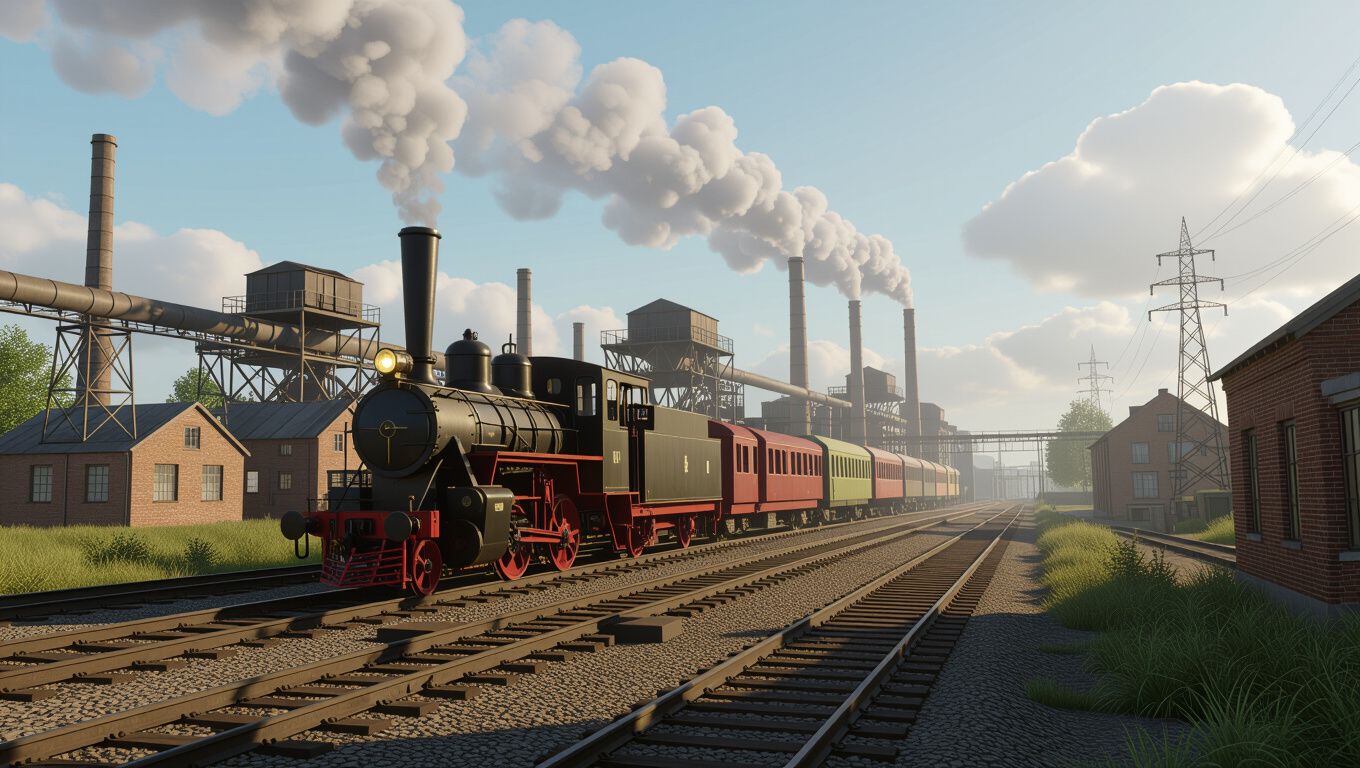
Britain’s textile exports demonstrate the commercial scale that mechanization enabled. In 1760, British textile exports totaled approximately 2 million pounds sterling annually. By 1820, that figure had grown to 40 million pounds sterling, a twenty-fold increase in just 60 years. This explosive growth occurred because industrial factories could produce textiles at costs 50-70 percent below traditional craft production. Textile magnates amassed enormous fortunes, and Britain captured dominant market share in global cloth trade, establishing itself as the world’s manufacturing powerhouse.
Iron and Steel Production Innovation
Iron production transformed through innovations in smelting and refining that mechanized the entire process from ore to finished metal. Traditional charcoal-fired forges produced iron in limited quantities, with significant losses during processing. The development of coke smelting, pioneered by Abraham Darby in 1709, allowed blast furnaces to use coal instead of charcoal, dramatically reducing fuel costs and increasing output. Iron production doubled, then tripled, providing abundant metal for machinery, construction, and tools that powered further industrial development.
Improved iron production enabled construction of larger, more efficient machinery and infrastructure projects previously impossible at scale. The world’s first iron bridge, completed in Shropshire in 1779, demonstrated that iron could replace stone and wood for major construction. Iron railways, developed in the 1820s, revolutionized transportation by enabling unprecedented cargo and passenger movement. Iron ship construction allowed oceanic commerce to expand dramatically, connecting global markets and establishing the trade networks that continue dominating international business today.
Comparing Industrial Periods and Their Characteristics
Historians divide the industrial revolution into distinct periods, each characterized by different dominant technologies and economic patterns. Understanding these periods helps clarify how the industrial revolution unfolded gradually rather than as an instantaneous transformation. The First Industrial Revolution (1760-1840) focused on textiles and iron, driven by steam power and factory organization. Subsequent industrial periods introduced electricity, chemicals, and petroleum technologies that created entirely new industries and further accelerated economic growth.
Each industrial period built upon technological foundations from previous eras, creating cumulative advancement that accelerated innovation cycles. The Second Industrial Revolution (1870-1914) witnessed rapid electrification and chemical manufacturing development. The Third Industrial Revolution (1969 onward) introduced digital computing and automation. Comparing these periods reveals patterns about how new technologies adopt, spread, and create competitive advantages. Understanding these historical patterns provides perspective on contemporary technological adoption and its likely economic impacts.
This comparison demonstrates that the industrial revolution was not a single event but an ongoing process of technological adoption and innovation. Each period introduced transformative technologies that created competitive advantages for early adopters and disadvantages for those who resisted change. Nations that embraced new industrial technologies prospered economically and gained geopolitical influence, while those that resisted industrialization fell behind. The pattern repeats across each industrial period, suggesting that technological adoption remains a primary driver of national competitiveness and economic success.
Frequently Asked Questions About Industrial Revolution
What was the primary driver of industrial revolution growth?
Steam power mechanization and factory organization enabled unprecedented production efficiency and profit generation globally.
How did industrial revolution impact working families?
Industrial development forced rural workers into cities for factory employment, fundamentally restructuring family life and labor patterns.
Why did Britain lead the industrial revolution initially?
Britain possessed coal reserves, capital, colonial trade networks, and legal systems that encouraged technological innovation and investment.
Conclusion and Next Steps
The industrial revolution fundamentally transformed human civilization by proving that mechanization could generate unprecedented wealth, productivity, and economic growth. Understanding this historical transformation provides essential context for evaluating contemporary technological changes, including automation, artificial intelligence, and digital innovation. The industrial revolution established principles about how societies adopt new technologies, how competitive advantages shift, and how nations can prosper or decline based on their engagement with innovation. These historical lessons remain directly applicable to modern business, policy, and technology strategy challenges.
To deepen your understanding of technological transformation and economic development, start by exploring the from authoritative sources. Connect these historical insights to modern innovation by reading latest technology news that demonstrates how contemporary industrial patterns still reflect the industrial revolution’s foundational principles. Consider how mechanization’s impact on labor, trade, and competitiveness informs your own professional development and strategic decisions. Begin applying these historical perspectives to evaluate emerging technologies and their likely economic and social impacts on your industry and community.