Quick Answer
The industrial revolution fundamentally reshaped economies and societies between 1760 and 1840 by replacing manual labor with machine-based manufacturing. This period introduced steam power, factory systems, and mass production methods that accelerated urbanization, created new social classes, and established the technological foundations for modern industrial economies.
1. What the Industrial Revolution Actually Was
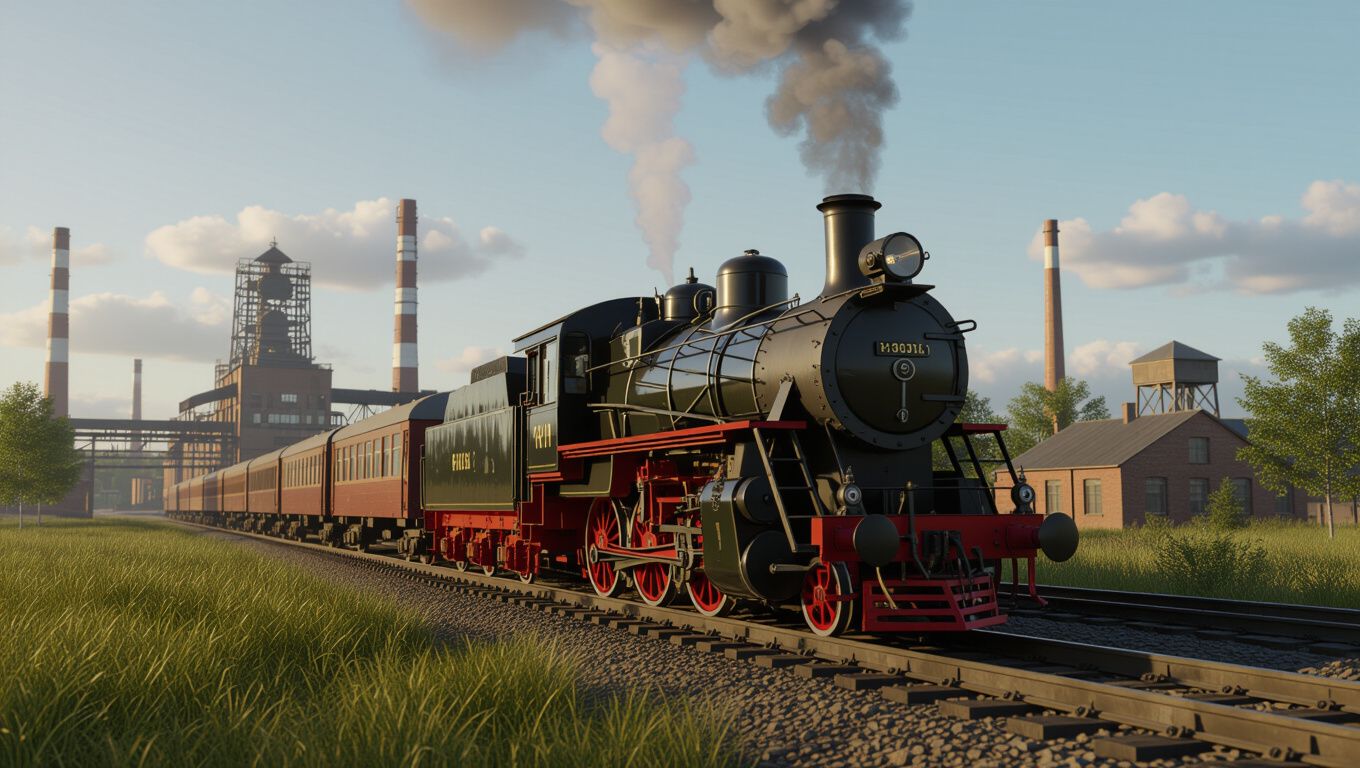
The industrial revolution refers to a period of human history, roughly spanning 1760 to 1840, during which agrarian economies transformed into industrial, machine-based systems. This transition occurred first in Great Britain, then spread throughout Europe and North America, fundamentally altering production methods, labor structures, and human settlement patterns. The shift from handicraft production to mechanized manufacturing represented an unprecedented acceleration in economic output and technological innovation. During this era, inventions such as the spinning jenny, water frame, and power loom revolutionized textile production and set templates for mechanization across other industries. Coal-powered steam engines provided reliable, scalable energy sources that freed manufacturers from dependence on water mills and human muscle power. This technological foundation enabled factories to concentrate workers and machines in centralized locations, creating the first large-scale industrial facilities and the modern factory system.1.1 Technological Innovations That Defined the Period
The industrial revolution introduced machines and manufacturing processes that operated with unprecedented speed and consistency. James Watt’s improvements to the steam engine in 1769 provided factories with dependable power generation that could operate year-round and scale to meet growing production demands. This single innovation cascaded through textile manufacturing, iron production, mining, and transportation, creating interconnected industrial ecosystems that magnified productivity gains across entire regions. Beyond steam power, innovations in iron production using coke fuel allowed manufacturers to produce higher-quality metal components with greater efficiency. The development of precision machine tools enabled standardized part manufacturing, which later became foundational to interchangeable parts assembly systems. These technological strides transformed production from small-scale, craft-based operations into standardized, repetitive, high-volume manufacturing that could serve distant markets through improved transportation networks.1.2 Labor Organization and Factory Systems
The factory system represented a revolutionary change in how work was organized and performed. Rather than skilled artisans working independently in small workshops, factory systems concentrated hundreds of workers under single roofs, performing specialized, repetitive tasks orchestrated by managers and machines. This approach eliminated the need for extensive training, allowing factory owners to employ women, children, and unskilled laborers at lower wages while maintaining consistent production standards. The factory environment created new social dynamics and labor challenges that shaped modern industrial relations and worker protections. Long working hours, often 12 to 16 hours daily, poor ventilation, dangerous machinery, and minimal safety standards created hazardous conditions that eventually prompted regulatory reforms. These labor conditions also catalyzed worker organization, trade union formation, and social movements that established frameworks for modern employment law and occupational safety standards.2. Why the Industrial Revolution Fundamentally Matters
The industrial revolution matters because it established patterns and systems that continue driving modern economies and technological development. The principles of mechanization, standardization, and mass production remain central to contemporary manufacturing, supply chain management, and economic growth strategies. Understanding this historical period provides essential context for comprehending current industrial challenges, technological disruption, and economic inequality patterns that trace their roots to this transformative era. The wealth created through industrial manufacturing enabled investment in infrastructure, education, and scientific research that accelerated subsequent technological breakthroughs. This period also established the relationship between technological innovation and economic power that continues to shape international relations and competitive advantage. Nations that embrace advanced manufacturing and technological innovation consistently outpace those relying on traditional agricultural or resource extraction economies.2.1 Economic Productivity and Wealth Creation
The industrial revolution multiplied economic output per worker by factors of five to ten, creating unprecedented wealth accumulation and capital availability for reinvestment. Manufacturing productivity increased so dramatically that prices for textiles, metal goods, and other products fell substantially, making consumer goods accessible to broader populations. This price deflation combined with wage growth to expand purchasing power, creating consumer markets that further stimulated production and industrial expansion. The capital generated through industrial manufacturing funded infrastructure development including canal systems, railroads, and urban facilities that connected producers and consumers more efficiently. Entrepreneurs and industrial investors gained sufficient wealth to influence political processes, shape policy decisions, and direct economic development toward capital-intensive projects that benefited industrial enterprises. This economic concentration established patterns of wealth inequality that persist in modern economies where capital ownership provides outsized returns compared to labor compensation.2.2 Technological and research institutions. Universities shifted focus toward practical applied sciences rather than purely theoretical study, establishing engineering programs and technical curricula that persist in modern educational systems. This emphasis on practical science accelerated the pace of innovation, as manufacturers invested in research to improve production methods, develop new materials, and create competitive advantages. The success of mechanical and chemical innovations during this period reinforced the cultural belief that scientific and technological approaches could solve human problems and improve living standards. This mindset became deeply embedded in Western culture and economic systems, creating sustained investment in research and development that continues driving technological progress. Modern pharmaceutical development, computer science, materials engineering, and biotechnology all trace their methodological foundations to industrial-era scientific and engineering approaches. How Industrial Systems Still Function Today Modern industrial production systems operate according to principles established during the industrial revolution and refined through subsequent technological generations. Factories remain centralized locations where machines and workers combine to produce goods at scale, though contemporary operations incorporate computerized controls, robotics, and supply chain optimization technologies. The fundamental logic of mechanization, standardization, and division of labor that characterized industrial revolution factories continues dominating manufacturing strategy across virtually all industrial sectors. Contemporary manufacturers apply industrial revolution principles through lean manufacturing, just-in-time inventory systems, and continuous process improvement methodologies that maximize efficiency and minimize waste. These modern applications represent evolved versions of techniques pioneered during the industrial era, demonstrating remarkable persistence of core manufacturing philosophies across more than two centuries. Understanding the foundational mechanics of industrial production illuminates why certain approaches persist and how emerging technologies integrate into existing industrial frameworks. Mechanization and Automation Progression
Mechanization began with machines replacing specific human tasks, as spinning jennies replaced hand spinning and power looms replaced hand weaving. The progression continued through the 19th and 20th centuries with increasingly sophisticated machines performing multiple steps sequentially, reducing human intervention and skill requirements. Contemporary robotics and computerized systems represent the logical extension of this mechanization trajectory, where machines handle physical tasks while computers manage coordination, quality control, and optimization decisions. Modern manufacturing plants deploy robots for repetitive, high-precision tasks while humans focus on oversight, maintenance, problem-solving, and quality assurance responsibilities. This division of labor mirrors the specialization that characterized industrial revolution factories, though the specific roles have shifted as machine capabilities increased. Advanced manufacturing facilities now incorporate artificial intelligence systems that monitor production in real-time, predict equipment failures, and automatically adjust parameters to maintain optimal efficiency, capabilities that automate decisions previously requiring human judgment.2.3 Supply Chain Coordination and Standardization
The industrial revolution established the principle of standardized, interchangeable parts that could be manufactured at different locations and assembled into finished products. This innovation enabled manufacturers to specialize in specific components, optimizing production for each type and creating supply networks that coordinated multiple independent facilities. Modern supply chain networks extend this principle globally, with components sourced from dozens of countries, transported through coordinated logistics systems, and assembled into products serving worldwide markets. Contemporary supply chain management employs sophisticated software systems that track materials through complex networks, optimize inventory levels, predict demand patterns, and coordinate delivery schedules. These digital systems represent technological advancement beyond what industrial revolution manufacturers could conceive, yet the underlying logic of standardization, specialization, and coordinated assembly remains unchanged. Manufacturers continue seeking efficiency gains through better coordination of supply networks, faster information flow, and reduced inventory carrying costs, challenges that animated industrial revolution innovators two centuries ago.3. Comparing Industrial Development Across Eras
Industrial development has progressed through distinct phases, each characterized by specific technological foundations, energy sources, and production methods. Comparing these phases reveals continuity in underlying principles while highlighting how technological capabilities expanded across generations. Understanding these distinctions clarifies why certain industrial strategies succeed in particular contexts and how emerging technologies build upon established manufacturing frameworks.| Industrial Era | Primary Energy Source | Key Technologies | Production Characteristics |
|---|---|---|---|
| First Industrial Revolution (1760-1840) | Water and coal-powered steam engines | Spinning jenny, water frame, power loom, steam engine improvements | Textile mechanization, factory system emergence, manual assembly of components |
| Second Industrial Revolution (1870-1914) | Electricity and petroleum fuels | Internal combustion engine, electric motors, assembly line production, chemical processes | Mass production scaling, standardized parts, specialized factories for specific products |
| Third Industrial Revolution (1969-present) | Electricity and diverse fuel sources | Computers, programmable logic controllers, robotics, digital networks | Flexible automation, product customization, reduced setup times, digital information tracking |
| Fourth Industrial Revolution and Industry 4.0 (2015-present) | Distributed renewable of Things, cloud computing, advanced robotics, additive manufacturing | Real-time optimization, predictive maintenance, mass customization, autonomous systems, data-driven decisions | |
| Emerging Fifth Industrial Revolution (2025-2035) | Renewable energy with storage systems | Human-AI collaboration, quantum computing, biotechnology integration, autonomous supply chains | Human creativity combined with machine precision, circular economy practices, personalized production at scale |
4. Implementing Industrial Principles in Modern Operations
Organizations seeking to optimize manufacturing performance can apply lessons from the industrial revolution while leveraging contemporary technological capabilities. The industrial revolution established that mechanization, standardization, and specialized division of labor dramatically increase productivity compared to traditional craft approaches. Modern operations that successfully implement these principles, adapted to current technological contexts, consistently outperform competitors relying on manual processes or inconsistent methodologies. Implementing industrial principles requires careful attention to workforce development, as technological advancement does not eliminate the need for skilled workers but transforms the specific skills required. Training programs should emphasize technical competencies applicable to available equipment while developing adaptability to changing technological requirements. Organizations that invest in continuous employee education while deploying sophisticated production technologies achieve superior results compared to those emphasizing only technological investment or only labor training.4.1 Process Standardization and Documentation
Standardization formed the foundation of industrial revolution manufacturing success, enabling consistent quality and efficient worker training. Modern operations enhance standardization through detailed process documentation, digital workflow systems, and quality management protocols that enforce consistency across production shifts and multiple facility locations. Establishing standardized procedures allows newer employees to achieve productivity quickly and reduces variation in final product quality. Implementing robust standardization requires systematic process analysis to identify optimal approaches, then encoding these approaches into documented procedures that all operators follow consistently. Digital systems can enforce procedure compliance through automated controls that prevent operators from deviating from approved steps or using unauthorized materials. Regular process reviews identify improvements that should be incorporated into updated standards, creating continuous improvement cycles that progressively enhance efficiency and quality, applying industrial revolution principles with contemporary management technology.4.2 Workforce Integration with Automated Systems
Successful modern manufacturing integrates human workers with automated systems rather than attempting to eliminate human involvement entirely. Workers focus on tasks requiring judgment, problem-solving, adaptability, and quality assessment while machines handle repetitive, high-precision operations. This division mirrors the industrial revolution’s discovery that humans and machines contribute different capabilities, and their combination produces superior results to either operating independently. Effective human-automation integration requires appropriate training so workers understand equipment capabilities, recognize anomalies, and know when to intervene in automated processes. Workstations should be designed ergonomically to minimize physical strain while allowing workers to monitor equipment performance and respond to alerts effectively. Compensation systems should acknowledge worker contributions to optimization and continuous improvement, incentivizing employees to suggest process enhancements and report problems that could be solved through procedure modifications.5. Frequently Asked Questions About industrial revolution
5.1 How big is the industrial revolution market?
The modern industrial manufacturing sector generates approximately $13 trillion annually in global economic output, representing roughly 15% of worldwide GDP. This substantial market encompasses traditional manufacturing industries transformed by the industrial revolution combined with contemporary sectors like aerospace, pharmaceuticals, and electronics manufacturing that apply industrial principles established centuries ago.
5.2 What made the industrial revolution different from previous manufacturing?
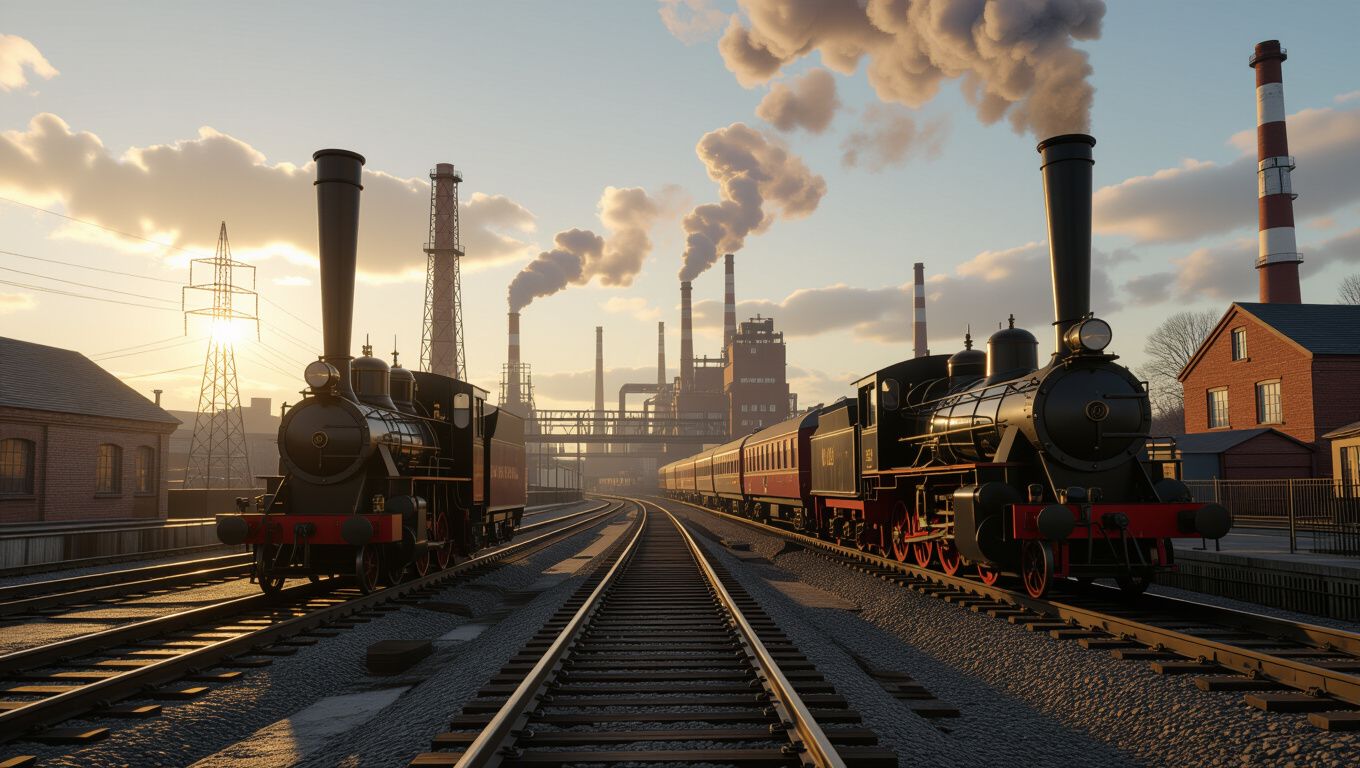
The industrial revolution introduced mechanical power sources and factory systems that replaced handicraft production with standardized, high-volume manufacturing. Previously, individual artisans produced goods through manual labor in small workshops, resulting in high cost, limited quality consistency, and slow production. Mechanized factories dramatically accelerated production, lowered costs, and enabled consistent quality that made manufactured goods accessible to broader populations.
5.3 How does the industrial revolution compare to Industry 4.0?
The industrial revolution mechanized physical production using steam power and machinery, while Industry 4.0 mechanizes information processing and decision-making through artificial intelligence and interconnected digital systems. Both share the fundamental goal of increasing productivity through mechanization, but Industry 4.0 extends automation into domains the industrial revolution could not address, real-time optimization, predictive maintenance, and mass customization through digital flexibility rather than dedicated machinery.
5.4 What were the main challenges of industrial revolution factories?
Industrial revolution factories faced severe worker safety hazards, unsanitary conditions, exploitation of child labor, and environmental pollution from coal consumption and chemical processes. Poor working conditions eventually prompted regulatory reforms including child labor restrictions, workplace safety standards, and environmental protections that established modern occupational and environmental regulations. These challenges demonstrated that rapid technological advancement without apply industrial revolution principles?
Contemporary manufacturers should apply standardization, mechanical efficiency, and specialized division of labor while leveraging digital systems for coordination and optimization. Implementing documented standard procedures, deploying automation for repetitive tasks, and focusing human workers on judgment-intensive roles provides manufacturing performance improvements similar to those industrial revolution factories achieved. Regular process analysis and continuous improvement create iterative advancement that the industrial revolution pioneers would recognize and support.