1. Introduction
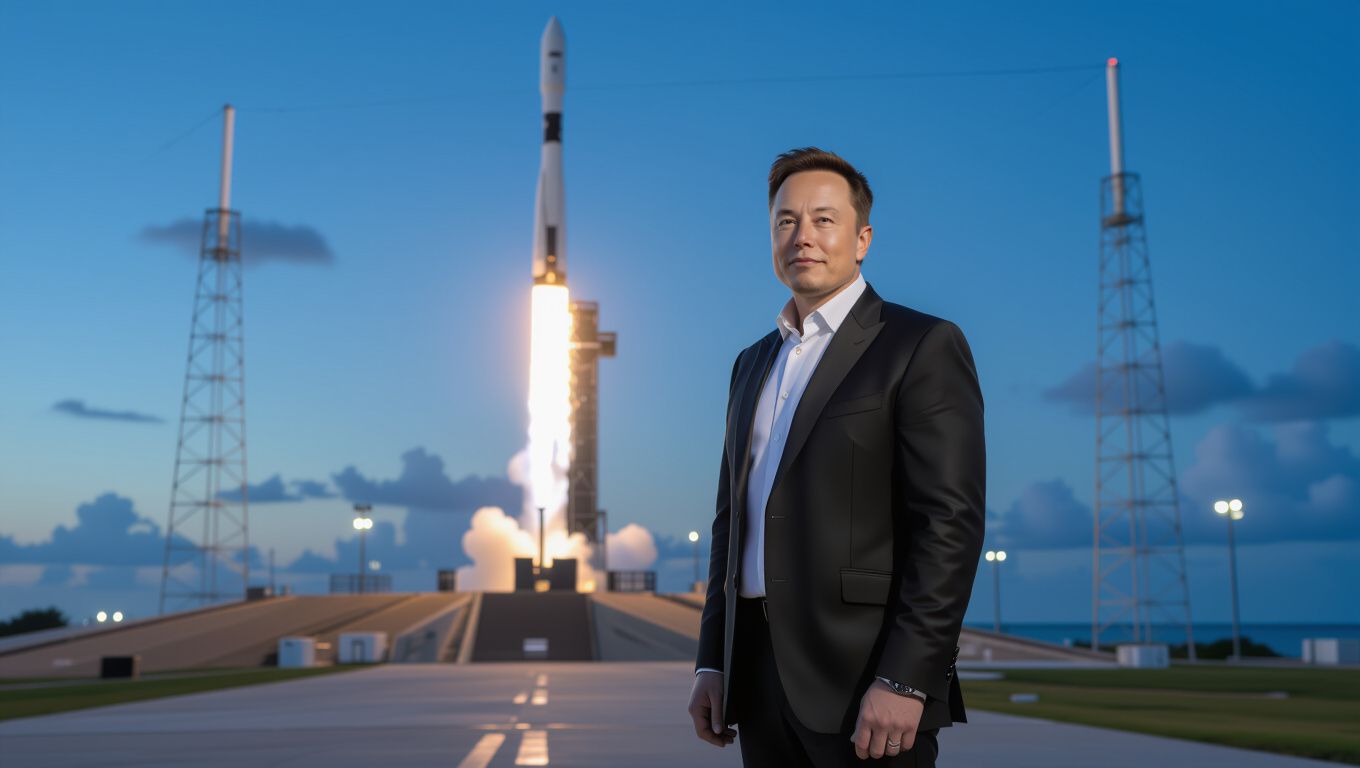
Elon Musk Space X leads the charge in modern space exploration. The company builds rockets that land themselves and satellites that beam internet worldwide. Leaders watch as SpaceX cuts costs and speeds up missions. Teams achieve what others dream about each year. Readers gain insights into how this powerhouse shapes our future in space. Experts praise the bold steps that make stars reachable for everyone. This article breaks down the story from start to now.
SpaceX changes how humans reach orbit and beyond. Elon Musk started it to make life multi-planetary. Rockets fly often and return for reuse. Satellites connect remote areas with high-speed links. Governments partner for crewed flights to stations. Private firms book launches for payloads. The impact grows as 2026 brings new records.
People ask what sets SpaceX apart from rivals. The answer lies in innovation and execution. Teams test fast and learn from failures. Investors see value in the reusable tech. Nations rely on these launches for security. You discover the full picture here step by step.
2. Foundation & Overview
2.1 Founding Vision
Elon Musk founded SpaceX in 2002 with a clear goal. He wanted to send humans to Mars and back. Early days focused on small rockets like Falcon 1. Engineers worked in a small Hawthorne factory. Musk invested his own money after PayPal success. The team faced three failed launches before victory. That first success proved private space travel works.
Musk drew from science fiction and real science. He read books on rocketry and hired top talent. The vision included full reusability from day one. Critics laughed at the idea of landing boosters. SpaceX pushed forward with rapid prototypes. Employees shared the dream of colonizing Mars. This drive built a culture of bold risks.
Founders set rules for fast iteration. They built engines in-house to control costs. Merlin engines powered early flights. Teams tested on stands before flights. Musk communicated openly on social media. This transparency built public support. The foundation laid ground for giant leaps ahead.
2.2 Company Growth
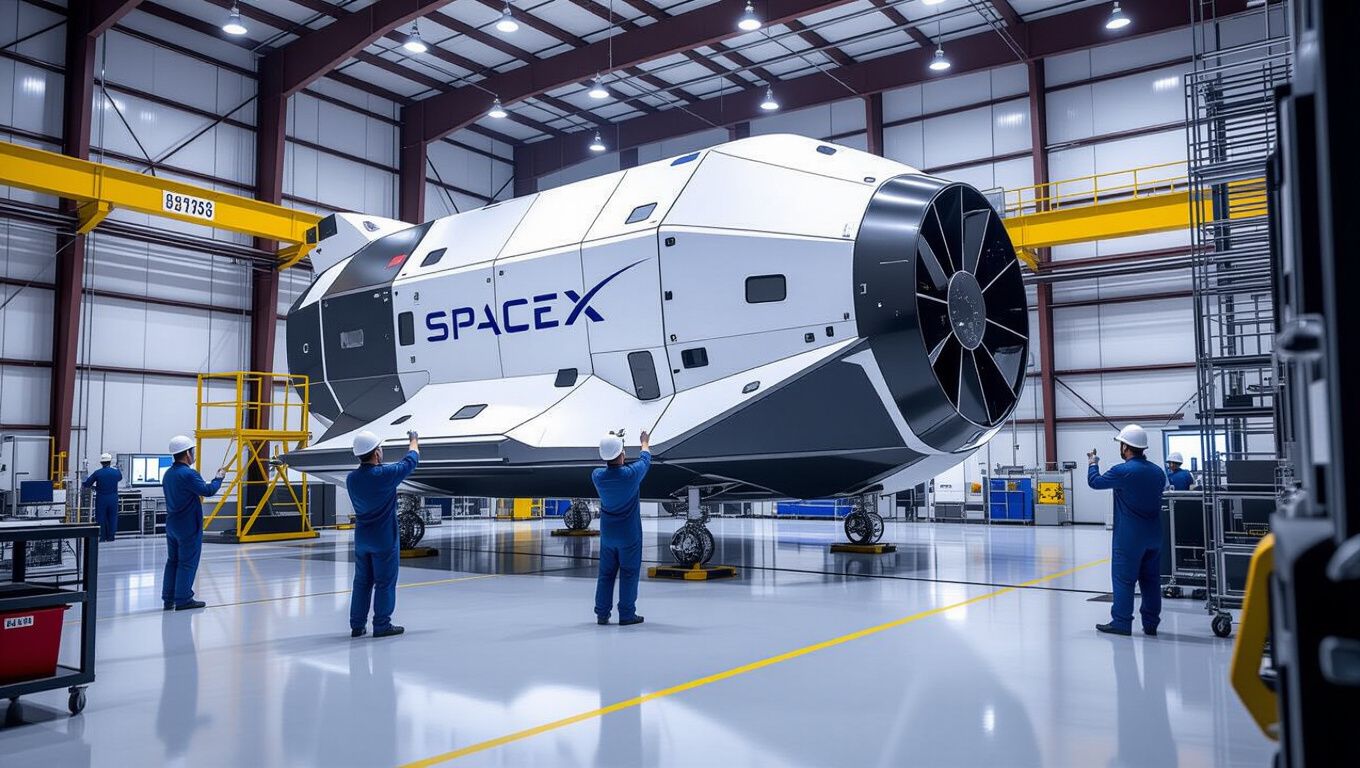
SpaceX grew from a startup to a space leader by 2026. Falcon 9 became the workhorse with over 300 launches. Starship emerged as the big vehicle for deep space. Factories expanded in Texas and Florida. Employee count hit 13,000 with skilled engineers. Revenue topped billions from launches and contracts. NASA awarded key deals for station cargo.
Growth accelerated with Starlink deployment. Thousands of satellites orbit Earth now. Users in rural spots get fast internet. The constellation expands monthly with rideshare missions. SpaceX secured defense contracts too. International partners book slots regularly. Valuation soared past private records.
Musk guided expansions into Boca Chica. Starbase became a launch hub for super heavy rockets. Teams stacked Starships for orbital tests. Successful catches of boosters wowed watchers. Growth touched every part of space industry. Suppliers ramped up for Raptor engines. SpaceX now eyes lunar bases and Mars cities.
3. Key Benefits & Advantages
3.1 Cost Reduction
SpaceX slashes launch prices through reusability. Traditional rockets cost hundreds of millions each time. Falcon 9 boosters fly ten times or more. Customers pay under 60 million per launch. This beats rivals by half or more. Governments save budgets for science. Small satellites find affordable rides now.
Engineers refine propellants and fairings too. They recover nose cones from ocean droneships. Each reuse drops marginal costs further. Starlink margins fund bigger projects. Clients like NASA praise the savings. Private ventures multiply thanks to low barriers. Benefits flow to global economy.
Musk pushes for even lower prices. Starship aims at thousands per launch eventually. Bulk propellant production cuts fuel bills. Vertical integration owns the supply chain. Teams avoid middlemen markups. Results show in market share dominance. Everyone wins from cheaper access to space.
3.2 Innovation Speed
SpaceX iterates designs faster than anyone. They fly prototypes weekly at Starbase. Data from tests improves next versions quick. Rivals take years between flights. This pace lands contracts worth billions. Crew Dragon proved human flight reliability. Speed builds trust with picky customers.
Software runs autonomous landings. Neural networks guide boosters home precise. Teams simulate millions of scenarios first. Hardware evolves with 3D printing. New alloys withstand reentry heat better. Innovation touches ground ops too. Droneships position for catches in rough seas.
Public streams tests live on X. Fans see explosions turn to triumphs. This openness sparks talent recruitment. Universities partner for student projects. Speed advantages compound over time. SpaceX stays ahead in the race. Future missions benefit from lessons learned now.
4. Detailed Analysis & Mechanisms
4.1 Rocket Technology
SpaceX rockets use methane and oxygen fuels. Raptor engines thrust over 200 tons each. Super heavy stacks 33 of them for liftoff. First stage separates and flips for landing. Grid fins steer through atmosphere thick. Legs deploy seconds before touchdown. This sequence repeats with high success rates.
Starship heats tiles protect during reentry. Plasma reaches thousands of degrees hot. Ablative materials backup the shield. Cold gas thrusters fine-tune orientation. Vacuum versions optimize for space. Teams test flaps in wind tunnels. Tech enables moon and Mars trips.
Propellant transfer demos pave way for depots. In-orbit refueling extends range far. Pipes connect ships autonomously. Pumps handle cryogenic liquids smooth. Analysis shows grams per second flow rates. Reliability tests run for months. Mechanisms make long journeys possible.
4.2 Satellite Networks
Starlink satellites laser-link data between them. Ground stations route to users below. Phased arrays track beams dynamic. Low Earth orbit cuts latency low. Speeds hit 200 megabits per second. Droneships deploy stacks of 60 at once. Network scales to millions of terminals.
SpaceX deorbits old sats responsible. Ion thrusters nudge them to burn up. Collision avoidance uses AI predictions. FCC approves expansions yearly. Users in ships and planes connect seamless. Revenue funds rocket development steady. Networks blanket poles and oceans now.
V2 minis pack more power small. Direct to cell tech trials start soon. Partners like T-Mobile test calls. Mechanisms relay signals through atmosphere. Beams switch sats as you move. Analysis confirms global coverage by 2026. Benefits reach underserved billions.
5. Comparison & Case Studies
SpaceX outpaces Blue Origin in launch cadence. Blue focuses on New Shepard suborbital hops. SpaceX sends Falcon 9 weekly to orbit. Bezos funds from Amazon wealth slow. Case study of Artemis shows NASA picks SpaceX lander. ULA relies on expendable Atlas still. SpaceX reusability wins contracts repeated.
Arianespace struggles with Ariane 6 delays. Europe pays premium for sovereign launches. SpaceX underbids with proven track record. Case of Crew-1 mission highlights human spaceflight lead. Astronauts dock smooth after launch. Rivals like Boeing face Starliner setbacks. SpaceX reliability shines in ops.
China’s Long March series launches often too. They build copycat reusables now. SpaceX pioneered the tech years ahead. Case study of Starlink vs OneWeb shows market share grab. Competitors bankrupt under costs high. SpaceX vertical stack crushes on price and scale. Lessons apply to new entrants.
Russia’s Soyuz remains crew staple but old. Sanctions limit upgrades now. SpaceX ends U.S. reliance on foreign seats. Case of dearMoon flight plans luxury trips. Japanese billionaire books Starship loop. Comparisons reveal SpaceX versatility wide. Future cases will test Mars shots.
6. Comparison Table
| Company | Launch Cost (per kg to LEO) | Reusability Level |
|---|---|---|
| SpaceX | $2,500 | High (10+ flights) |
| Blue Origin | $50,000+ | Low (suborbital only) |
| ULA | $20,000 | Medium (partial reuse) |
| Arianespace | $15,000 | None |
| China CNSA | $10,000 (est.) | Emerging |
| Roscosmos | $25,000 | Low |
The table highlights SpaceX dominance in cost and reuse. Figures base on 2026 data from public reports. Blue Origin lags far behind in orbital capability. ULA improves with Vulcan but trails cadence. Arianespace invests in reuse now too late. China pushes hard yet lacks scale.
Readers note how reusability drives the gap wide. SpaceX flights per booster top all. Emerging players copy the model slow. Table data guides investors smart. Governments shift budgets accordingly. Future updates will track Starship effects. Comparisons evolve as industry matures.
7. Implementation & Best Practices
7.1 For Governments
Governments contract SpaceX for reliable access. NASA uses for station resupply steady. Best practice starts with clear specs early. Joint tests build confidence mutual. Europe follows with Galileo rideshares. Track records justify multi-year deals. Savings fund science payloads more.
Security clears payloads for defense sats. SpaceX complies with ITAR rules strict. Practice diverse launch sites for backup. Vandenberg handles polar orbits well. Governments integrate Starlink for comms remote. Best teams train on Dragon sims. Implementation scales national programs up.
Long-term pacts lock in rates low. Monitor progress with milestones tied. SpaceX delivers ahead often. Practice shares data for joint missions. Artemis teams plan lunar gateways. Governments lead humanity outward this way.
7.2 For Businesses
Businesses book launches via SpaceX site. Small sats share rides on Transporter missions. Best practice books early for slots prime. Earth observation firms track climate change. Telecoms deploy constellations fast. Contracts include insurance options standard.
Practice scales with bulk deals big. Starlink serves enterprise bandwidth needs. Teams customize payloads for fairings tight. Integration facilities help prep smooth. Businesses gain data realtime from orbit. Best monitor weather for windows launch. Implementation boosts revenues orbital.
Private crew missions open new revenue. Axiom stations host research clients. Practice partners with NASA for certs. SpaceX handles all logistics end-to-end. Businesses enter space economy thriving.
8. Challenges & Solutions
SpaceX faces regulatory hurdles from FAA. Launch approvals delay tests sometimes. Teams work with agencies for streamlined permits. Boca Chica noise bothers locals nearby. Community funds build infrastructure better. Environmental reviews balance progress green. Solutions keep cadence high overall.
Starship explosions draw scrutiny public. Rapid unscrewing fixes designs quick. Insurance covers property damages full. Competitors lobby against monopoly fears. SpaceX proves market through performance. Supply chain strains hit engine parts. In-house forges ramp production up.
Talent wars pull engineers away. High pay and missions exciting retain them. Mars vision motivates long term. Cyber threats target networks vital. Redundant systems and encryption protect data. Challenges strengthen resolve firm. Solutions pave road to stars.
Orbital debris risks grow with sats many. Auto-deorbit tech clears paths safe. International rules evolve with talks. Fuel logistics for deep space test limits. Depot demos prove concepts viable. SpaceX turns obstacles into advances steady.
9. Conclusion & Call-to-Action
SpaceX under Elon Musk reshapes space forever. Reusable rockets lower barriers high. Starlink connects world wide open. Missions to moon and Mars loom close. Teams achieve impossible feats regular. Industry follows the trail blazed. Future holds colonies and travel routine.
Readers see the power of vision bold. Investments pour in for good reason. Partnerships multiply benefits shared. Challenges met with ingenuity sharp. SpaceX leads humanity multi-planetary life. Progress accelerates every launch successful.
Stay updated on X for live events. Book your satellite launch today at SpaceX.com. Follow Elon Musk for insider views. Join the space revolution now. Support missions that expand horizons. Act today and reach for stars.