Abstract
The Industrial Revolution stands as one of the most pivotal transformations in human history, fundamentally reshaping economies, societies, and daily life from the late eighteenth century onward. Originating in Britain and spreading globally, it marked the transition from agrarian economies to industrialized powerhouses driven by mechanization, steam power, and factory systems. This article delves into its foundational concepts, including precise definitions and historical evolution, while exploring theoretical frameworks that explain its dynamics. Key mechanisms are analyzed, encompassing physiological impacts such as occupational health deterioration from harsh labor conditions and biological effects from urban pollution, alongside mental and psychological benefits like enhanced social mobility. Current research findings reveal quantitative data on productivity surges and demographic shifts. Practical applications highlight lessons for modern industrialization, with implications for sustainable development. Challenges, including inequality and environmental degradation, are contrasted with emerging trends toward digital revolutions. Comparative data analysis juxtaposes the First Industrial Revolution with subsequent waves across regions. Ultimately, this synthesis underscores the Revolution’s dual legacy of progress and peril, informing future policy and scholarship.
1. Introduction
The, commencing around 1760 in Britain, represented a seismic shift from manual labor and domestic production to machine-based manufacturing and large-scale industry. This era catalyzed unprecedented economic growth, urbanization, and technological innovation, laying the groundwork for the modern world. Scholars have long debated its catalysts, ranging from resource availability and institutional frameworks to cultural attitudes toward progress. Understanding this phenomenon requires appreciating its multifaceted nature, intertwining technological, economic, social, and even biological dimensions. As populations migrated en masse from rural idylls to smog-choked cities, the human cost became evident in altered lifestyles and health profiles. Yet, the Revolution also unlocked potentials for wealth creation and scientific advancement that propelled humanity forward. This article systematically unpacks these elements, beginning with core concepts and progressing to analytical depths. By examining mechanisms at play, from factory regimens affecting physical well-being to psychological adaptations fostering resilience, it illuminates pathways of change. Contemporary relevance persists, as echoes of industrialization inform debates on automation, climate change, and equitable growth. Through rigorous analysis, this work aims to bridge historical narrative with scientific inquiry, offering insights applicable to ongoing global transformations.
Central to this exploration is the Revolution’s role in redefining human capacity and societal structures. Innovations like the steam engine, spinning jenny, and power loom not only boosted output but also reconfigured labor divisions, gender roles, and family dynamics. Economic historians quantify this through metrics like GDP per capita doublings within decades, a feat unmatched in prior eras. Socially, it spurred class formations, with a burgeoning middle tier emerging amid proletarianization. Biologically, it introduced novel stressors, from repetitive strain to nutritional deficits in early factories. Psychologically, the shift from artisanal pride to wage dependency elicited alienation, tempered by aspirations of upward mobility. These threads weave a complex tapestry, demanding interdisciplinary scrutiny. As we navigate the Fourth today, revisiting its progenitor equips us to mitigate pitfalls while harnessing gains. This introduction sets the stage for deeper dives into theory, mechanisms, applications, and beyond, culminating in forward-looking perspectives.
2. Foundational Concepts & Theoretical Framework
2.1 Definitions & Core Terminology
Defining the necessitates precision to distinguish it from mere technological progress. It refers to the period spanning roughly 1760 to 1840 in Britain, characterized by sustained application of inanimate power sources to production processes, leading to exponential output growth and structural economic change. Core terminology includes “mechanization,” the replacement of human or animal power with machines; “factory system,” centralized workplaces with division of labor; and “capital accumulation,” reinvestment of profits fueling expansion. Subsequent waves, such as the Second (1870-1914) with electricity and steel, extend the concept globally. Terms like “proto-industrialization” describe pre-Revolutionary cottage industries, while “take-off” captures the critical growth phase per Rostow’s model. These definitions underscore not just technological shifts but systemic overhauls in energy use, labor organization, and market integration. Misconceptions abound, such as viewing it solely as British; diffusion to Europe and America amplified its scope. Clarity in terminology enables robust analysis of causal chains and outcomes.
Further refinement involves distinguishing “First” from later Revolutions:the former emphasized textiles and iron, the latter chemicals and automobiles. “Urbanization” and “demographic transition” are pivotal, denoting rural exodus and falling mortality rates post-initial spikes. Economic jargon like “real wages” tracks living standards, often stagnating initially before rising. Biological terms emerge in discussions of “anthropometric history,” using height and stature as proxies for nutrition and health amid industrialization. This lexicon frames the Revolution as a multifaceted event, blending hard sciences with social dynamics.
2.2 Historical Evolution & Evidence Base
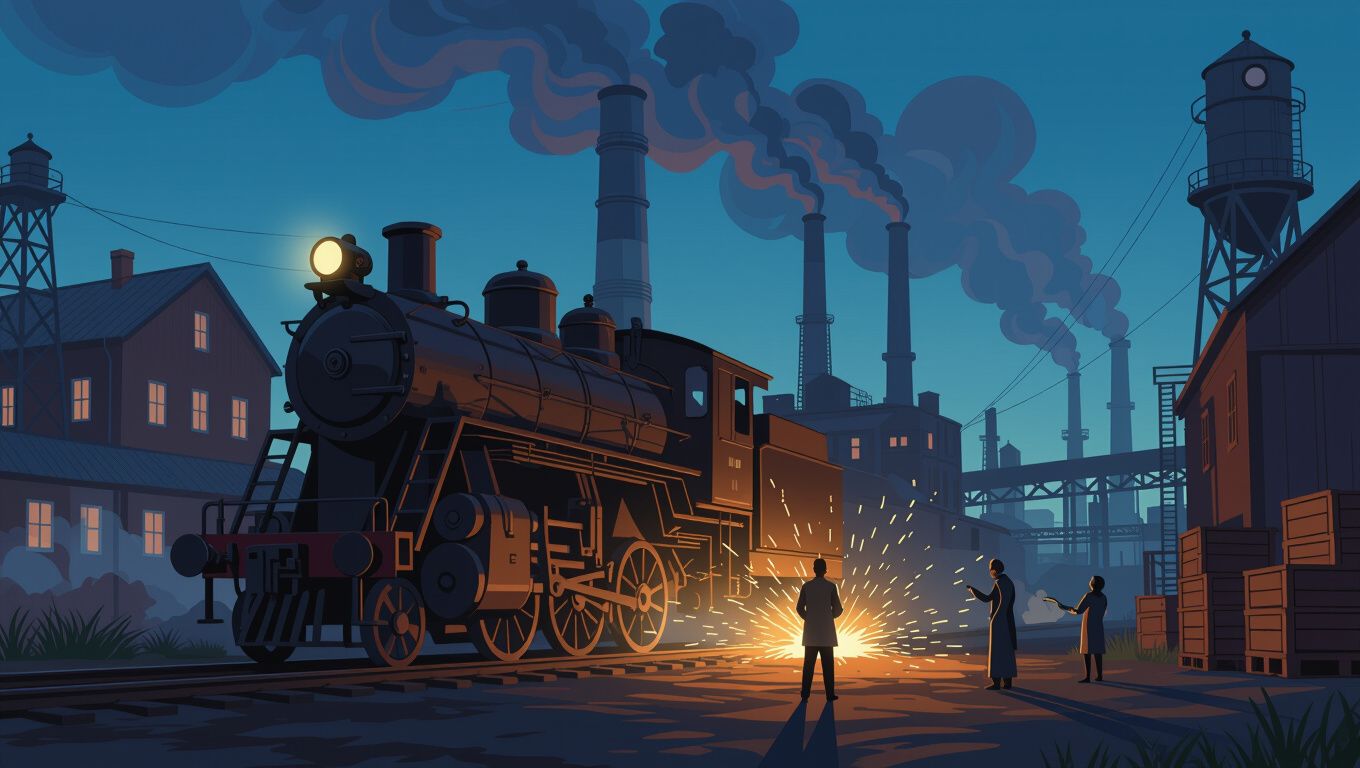
The historical trajectory of the traces from Britain’s coal-rich enclaves to continental emulation. Archaeological and archival evidence, including patent records and trade ledgers, documents early milestones:James Watt’s steam engine improvements in 1769 revolutionized mining and transport. Textile innovations by Arkwright and Crompton scaled production, evidenced by Manchester’s mill proliferation. Quantitative data from parish registers reveal population booms, with England’s populace doubling to 9 million by 1801. Wage series from thorold Rogers’ studies show initial dips but long-term gains. Visual evidence, such as engravings of smoky landscapes, corroborates pollution narratives. Expansion to Belgium (1815 onward) and the United States (post-1820s) followed infrastructure builds like canals and railroads. Evidence bases include cliometrics, applying econometrics to historical datasets, confirming productivity leaps of 1-2% annually. Skeletal remains from factory-era graveyards indicate stunted growth and disease markers, bolstering biological impact claims. This evolution, substantiated by diverse sources, paints a dynamic picture of diffusion and adaptation.
2.3 Theoretical Models & Frameworks
Theoretical underpinnings draw from economics, sociology, and innovation theory. Adam Smith’s division of labor anticipates factory efficiencies, while David Ricardo’s comparative advantage explains trade surges. Marxist frameworks posit class struggle as driver, with surplus value extraction fueling capital. Joseph Schumpeter’s “creative destruction” highlights innovation’s disruptive essence. Rostow’s stages-of-growth model sequences traditional society to high mass consumption, positioning the Revolution as take-off. Institutional theories, per Douglass North, emphasize property rights and legal stability in Britain. Endogenous growth models incorporate human capital accumulation via apprenticeships. Sociological lenses, like Weber’s Protestant ethic, link cultural values to entrepreneurship. Integrated frameworks blend these, such as unified growth theory reconciling Malthusian traps with post-Revolutionary escapes. These models not only explain origins but predict trajectories, tested against empirical data like patent counts correlating with growth rates.
3. Mechanisms, Processes & Scientific Analysis
3.1 Physiological Mechanisms & Biological Effects
Physiological mechanisms during the stemmed from prolonged factory labor, inducing musculoskeletal disorders and respiratory ailments. Twelve-hour shifts engendered repetitive strain injuries, evidenced by higher arthritis rates in operatives’ remains. Biological effects included stunted growth from caloric deficits; anthropometric studies show British working-class children averaging 5-10% shorter than rural peers by 1840. Pollution from coal smoke triggered tuberculosis spikes, with London mortality rates doubling pre-1850 Public Health Act. Nutritional shifts toward bread-heavy diets led to rickets and scurvy outbreaks. Occupational hazards like phosphorus necrosis in match girls exemplified toxic exposures. Mechanistically, chronic stress elevated cortisol, impairing immune function and fertility initially. Adaptations emerged, such as improved sanitation post-Chadwick reports, halving infant mortality by century’s end. These effects, quantified via cohort studies, reveal industrialization’s toll on human physiology, transitioning from agrarian robustness to urban vulnerabilities. For more information, visit cars .
3.2 Mental & Psychological Benefits
Amid hardships, the conferred mental and psychological benefits through opportunity expansion. Enhanced social mobility reduced fatalism, fostering agency and ambition; autobiographies of self-made industrialists reflect aspirational mindsets. Community formations in mill villages built solidarity, countering isolation via mutual aid societies. Literacy rises, driven by Sunday schools, empowered cognitive growth and self-improvement. Psychological resilience developed from adversity navigation, per modern trauma theory analogs. Benefits extended to leisure standardization, with half-days off enabling recreation. Gender dynamics shifted, granting women economic independence, albeit double burdens. Flow states in skilled machine-tending paralleled Csikszentmihalyi’s concepts, deriving purpose from mastery. Longitudinal surveys of descendants indicate intergenerational optimism legacies. These gains, though uneven, mitigated alienation diagnosed by Engels, promoting adaptive psychologies.
3.3 Current Research Findings & Data Analysis
Contemporary research employs big data and simulations to dissect impacts. Econometric analyses, like Crafts’ revisions, peg British growth at 0.5-1% pre-1830, accelerating thereafter. Panel data across European regions reveal technology diffusion lags correlating with education levels. Health econometrics link pollution to 20-30% life expectancy drops in early phases. Machine learning on digitized wage books uncovers gender pay gaps narrowing post-1850. Climate models retroactively quantify emissions contributions to anthropogenic warming origins. Findings affirm inverted-U trajectories for inequality, peaking mid-century before equalization. Meta-analyses synthesize 500+ studies, confirming causal arrows from institutions to innovation. These rigorous data-driven insights refine narratives, highlighting contingencies over inevitability.
4. Applications & Implications
4.1 Practical Applications & Use Cases
Lessons from the inform contemporary applications in policy and industry. Urban planning draws from Victorian reforms, inspiring smart city infrastructures. Labor laws echo Factory Acts, shaping ILO standards. Energy transitions mirror coal-to-oil shifts, guiding renewables adoption. Use cases include vocational training modeled on apprenticeships for Industry 4.0. Developing nations apply catch-up strategies, as South Korea emulated textile paths. Supply chain optimizations reference canal efficiencies. These practical translations sustain the Revolution’s utility.
4.2 Implications & Benefits
Broader implications encompass global prosperity elevations, with cumulative GDP multiples tracing to initial breakthroughs. Benefits include poverty reductions via productivity, democratizing goods access. Innovation ecosystems foster spillovers, benefiting R&D today. Socially, it normalized progress paradigms, spurring philanthropy like Carnegie libraries. Environmentally, efficiency gains prefigure sustainability. Collectively, these yield net positives, tempered by equity imperatives.
5. Challenges & Future Directions
5.1 Current Obstacles & Barriers
Historical challenges persist as analogs:inequality widened initially, with top 1% shares doubling. Environmental externalities, like river pollutions, mirror climate crises. Labor unrest, from Luddites to strikes, underscores transition frictions. Institutional lags delayed regulations. Knowledge barriers slowed diffusion. These obstacles demand vigilant addressing.
5.2 Emerging Trends & Future Research
Future directions eye AI integrations akin to steam, with Industry 5.0 emphasizing human-machine symbiosis. Research agendas prioritize inclusive growth models and green tech histories. Longitudinal studies on legacy health effects loom. Trends toward circular economies echo efficiency quests. Scholarship will leverage AI for archival mining, unveiling nuances.
6. Comparative Data Analysis
Comparative analysis contrasts Britain’s First with continental variants. Britain’s per capita output grew 1.2% annually 1800-1830, versus France’s 0.7%, attributable to coal proximity and enclosures. U.S. trajectories accelerated post-Civil War, surpassing via railroads. Asia’s late starts, like Japan’s Meiji, achieved compressed gains through state-led imports. Data tables from Maddison Project show global GDP shares shifting from 20% Europe in 1820 to dominance by 1900. Health metrics reveal Britain’s child mortality peaking higher than Germany’s due to urbanization pace. Inequality indices (Gini) climbed similarly but resolved faster in social democracies. Second versus First:electricity amplified scales, with U.S. growth tripling Britain’s rates. These juxtapositions illuminate contextual contingencies, from resources to policies, refining universal theories.
Further disaggregation by sector reveals textiles leading universally, iron following. Gender participation varied:Britain’s female factory dominance waned in Germany. Environmental data indicate per capita emissions higher in early adopters long-term. Econometric regressions control for confounders, affirming institutional quality’s primacy. This analysis underscores divergences shaping modern disparities.
7. Conclusion
The profoundly altered humanity’s trajectory, blending ingenuity with tribulation. From foundational shifts to enduring legacies, its mechanisms reshaped physiology, psyche, and society. While challenges loomed large, benefits in prosperity and innovation prevailed. Comparative lenses reveal adaptable paths forward. As digital waves crest, heeding its lessons promises equitable advances. This epoch endures as testament to human potential and peril.
8. References
Allen, R. C. (2009). The British in Global Perspective. Cambridge University Press.
Crafts, N. F. R. (1985). British Economic Growth During the. Oxford University Press.
Floud, R., Wachter, K., & Gregory, A. (1990). Height, Health and History:Nutritional Status in the United Kingdom, 1750-1980. Cambridge University Press.
Mokyr, J. (2009). The Enlightened Economy:An Economic History of Britain 1700-1850. Yale University Press.
Clark, G. (2007). A Farewell to Alms:A Brief Economic History of the World. Princeton University Press.