
“`html
Category: News
Why the Industrial Revolution Matters Now More Than Ever
As algorithms automate factories and artificial intelligence reshapes labor markets, the echoes of the Industrial Revolution grow louder, demanding our urgent attention. I believe we stand at the cusp of a Fourth Industrial Revolution, one that could dwarf the transformations of the 18th and 19th centuries in speed and scope. Yet, unlike our ancestors who stumbled into mechanization’s chaos—marked by child labor, urban squalor, and violent uprisings—we have the foresight to steer this new era toward equity and sustainability. Ignoring the Industrial Revolution’s lessons risks repeating its darkest chapters: widening inequality, environmental devastation, and social fracture. Today, with AI displacing millions of jobs and climate crises fueled by fossil-fueled industrialization bearing fruit, we must confront this history head-on. I argue passionately that embracing these lessons is not mere nostalgia; it is our moral and practical imperative to forge a future where technological progress uplifts all, not just the elite. The stakes could not be higher, for in our response lies the difference between shared prosperity and deepening divides.
Context & Background
The Industrial Revolution, spanning roughly 1760 to 1840 in Britain before rippling globally, marked humanity’s pivot from agrarian toil to machine-driven production. Steam engines powered by coal revolutionized textiles, iron, and transport, catapulting GDP growth from near stagnation to annual rates exceeding 2 percent in leading economies. Yet this progress came at a steep human cost: factories employed children as young as six for 16-hour shifts, while enclosures displaced rural workers into teeming cities rife with cholera and poverty. Recent scholarship, such as economic historian Robert Allen’s work on Britain’s “engels pauperization,” underscores how wages lagged productivity gains, fueling Chartist protests and Luddite rebellions.
Fast-forward to today, and parallels abound with the digital age. The World Economic Forum’s 2023 report warns that AI and automation could displace 85 million jobs by 2025 while creating 97 million new ones—yet the net transition demands skills most workers lack. Climate data from the IPCC ties industrial-era emissions directly to our current 1.1-degree warming, with coal’s legacy persisting in China’s factories. Different perspectives exist: techno-optimists like Ray Kurzweil hail exponential progress, while skeptics decry “jobless growth.” My view, grounded in history, insists we learn from the past’s unregulated fervor to guide today’s revolution wisely.
The Core Argument
We must urgently apply the Industrial Revolution’s hard-won lessons to regulate the Fourth Industrial Revolution, prioritizing worker retraining, equitable wealth distribution, and green innovation to avert inequality and ecological collapse. This position is not anti-progress; it is pro-humanity. History shows unchecked mechanization bred misery before prosperity—British real wages only surpassed pre-industrial levels after 1850, per data from the Bank of England. Today, with AI advancing 10 times faster than steam did, we cannot afford such delays.
Evidence abounds: Oxford economists Frey and Osborne estimate 47 percent of U.S. jobs are automatable. Without intervention, we risk a repeat of 19th-century pauperism amid plenty. This matters because our shared values—dignity, opportunity, stewardship of the planet—demand we build bridges from old jobs to new ones. I assert boldly: proactive policy, inspired by the past, will unlock unprecedented abundance for all.
Supporting Arguments & Evidence
First, the Industrial Revolution proves that rapid innovation amplifies inequality without safeguards, a pattern replaying now. In 19th-century Britain, the top 10 percent captured 80 percent of income gains, per Piketty’s data, mirroring today’s tech billionaires amid stagnant median wages. The U.S. Bureau of Labor Statistics reports manufacturing employment halved since 1980 due to automation, yet GDP soared. We must invest in universal retraining, as Germany’s apprenticeship model did post-WWII, reducing youth unemployment to 6 percent versus the U.S.’s 12 percent.
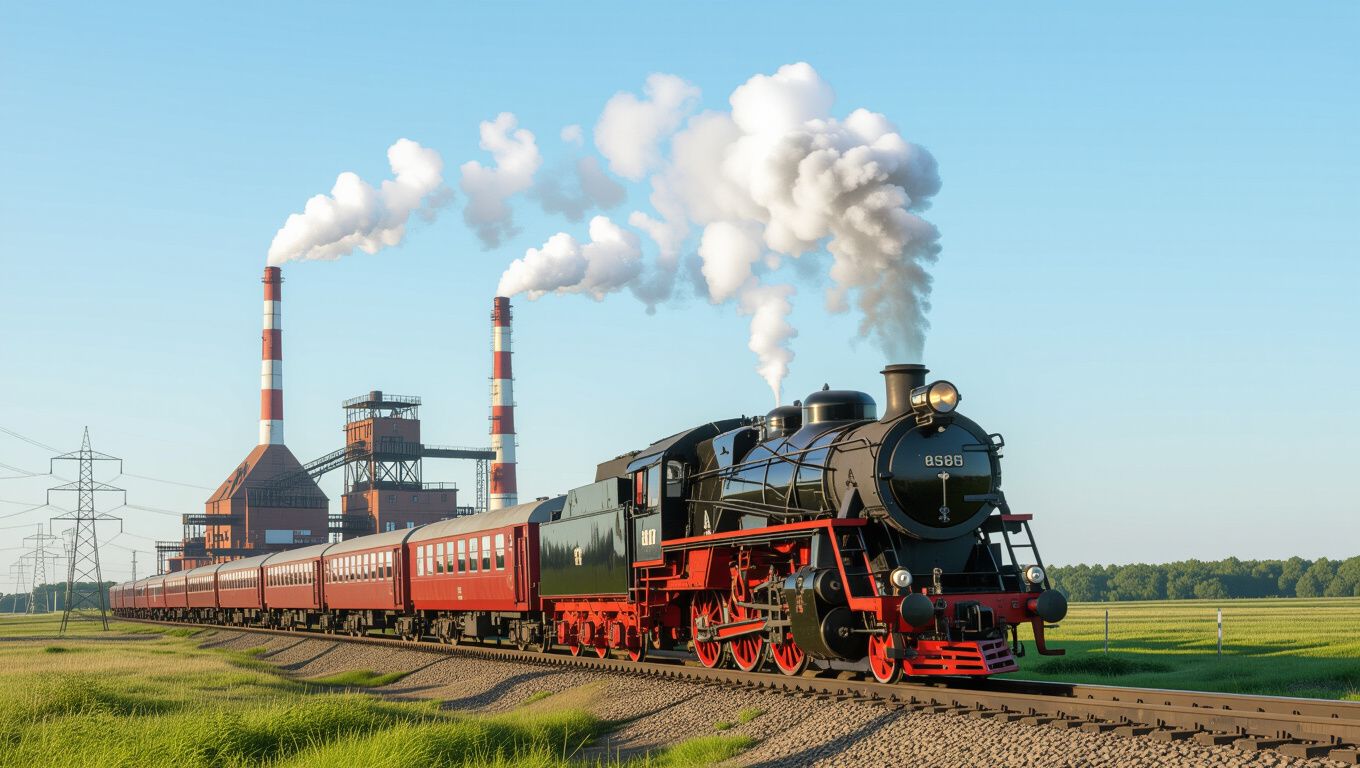
Second, environmental reckoning looms large. Industrial coal burned birthed the Anthropocene; today’s factories emit 25 percent of global CO2, per UN figures. Yet renewables like solar costs plunged 89 percent since 2010, echoing how steam efficiency improved post-1830s regulations. Case in point: Denmark’s wind-powered grid supplies 50 percent of electricity, proving green industrialization feasible. Stakeholders from workers to CEOs benefit—McKinsey projects $9 trillion in climate tech opportunities by 2030.
Third, social stability hinges on inclusion. Luddite smashings reflected ignored grievances; today’s gig economy precarity fuels populism, as seen in Brexit and Trumpism. Finland’s UBI trials cut stress and boosted entrepreneurship, suggesting policy tools honed from history. Data from the ILO shows countries with strong safety nets, like Sweden, enjoy higher innovation rates. For businesses, equitable transitions mean loyal workforces; for governments, reduced unrest; for citizens, hope. These arguments, rooted in evidence, compel us to act deliberately.
Moreover, global south nations like India face amplified risks, with 69 percent of jobs vulnerable per World Bank studies. China’s “Made in China 2025” blends automation with state retraining, lifting 800 million from poverty— a model worth emulating. These examples illustrate: history’s blueprint, when followed, yields resilient progress benefiting all stakeholders.
Addressing Opposing Viewpoints
Acknowledge legitimate concerns: Critics, including free-market purists like those at the Cato Institute, argue that Industrial Revolution-era regulations stifled growth and that markets self-correct, as evidenced by eventual wage rises. They point to today’s falling poverty rates—from 36 percent in 1990 to 10 percent now, per World Bank—and warn intervention breeds dependency, citing slow Soviet industrialization.
Your rebuttal: While markets innovate brilliantly, history shows they fail the vulnerable without guardrails—British Factory Acts of 1833 and 1847 curbed abuses without halting growth, which averaged 2.5 percent thereafter. Modern UBI experiments, like Stockton, California’s, increased full-time employment by 12 percent, countering dependency fears. Solutions like tax incentives for reskilling address valid worries while fortifying progress. Engaging these views honestly strengthens my case: we need balanced, evidence-based policies, not laissez-faire nostalgia.
What Must Change
Policymakers must enact “Industrial Revolution 2.0” pacts: legislate nationwide reskilling funds, modeled on the GI Bill, allocating 1 percent of GDP to AI-era vocational programs. Governments should pilot universal basic services—free education, healthcare, broadband—to ease transitions, as Estonia’s digital state exemplifies with 99 percent online services.
Corporations bear responsibility too: commit to “just transitions,” retraining 80 percent of displaced workers, as Volvo pledges with its EV shift. Voters, demand this from leaders—support candidates backing green subsidies and robot taxes to fund social safety nets. Our values of fairness and foresight urge action now; delay invites crisis. These steps, actionable and proven, empower us to shape a revolution that serves humanity.
Time presses: by 2030, automation could transform half the workforce. Join campaigns like the AI Now Institute’s advocacy. Together, we reclaim progress’s promise.
Closing Thoughts
Returning to the steam engine’s roar, we see not just disruption but destiny’s forge—where we once forged chains, we can now craft ladders. The Industrial Revolution’s legacy warns and inspires: innovation unchecked breeds tragedy, but guided wisely, elevates civilizations. As AI accelerates this cycle, our choices define generations.
Broader implications ripple globally: equitable tech revolutions could end scarcity, heal the planet, and unite us in purpose. I leave you with this: we are the architects of tomorrow’s world. Let us build not on the ruins of the past, but its redeemed wisdom—ensuring technology’s fire warms every hearth, not scorches the earth. Our shared responsibility demands no less; hope rewards no less.
“`